Experience

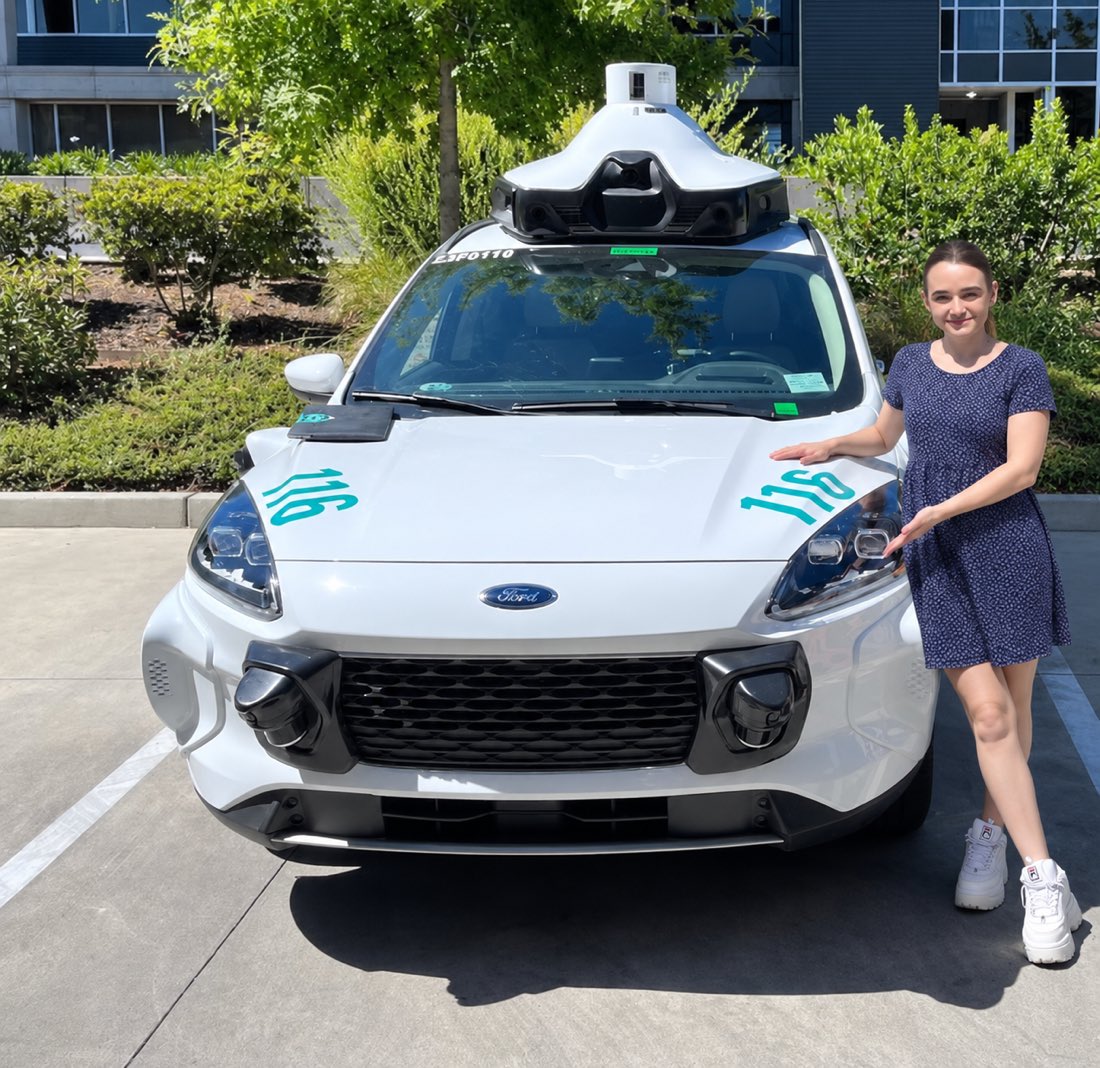
Standing beside an Argo AI autonomous test vehicle, a white Ford with a sensor pod on its roof.
Argo AI Internship: me with an autonomous Argo vehicle
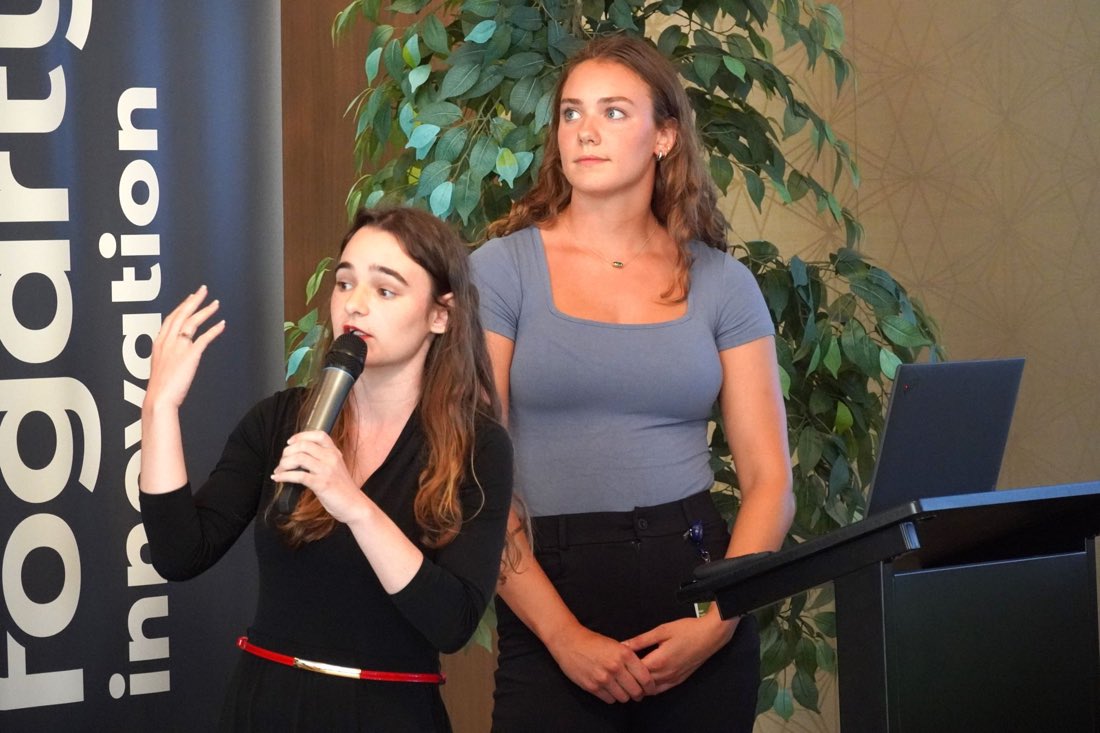
Speaking into a microphone in front of a Fogarty Innovation banner, another presenter standing behind.
Fogarty Innovation Internship: me presenting on my work at Fogarty
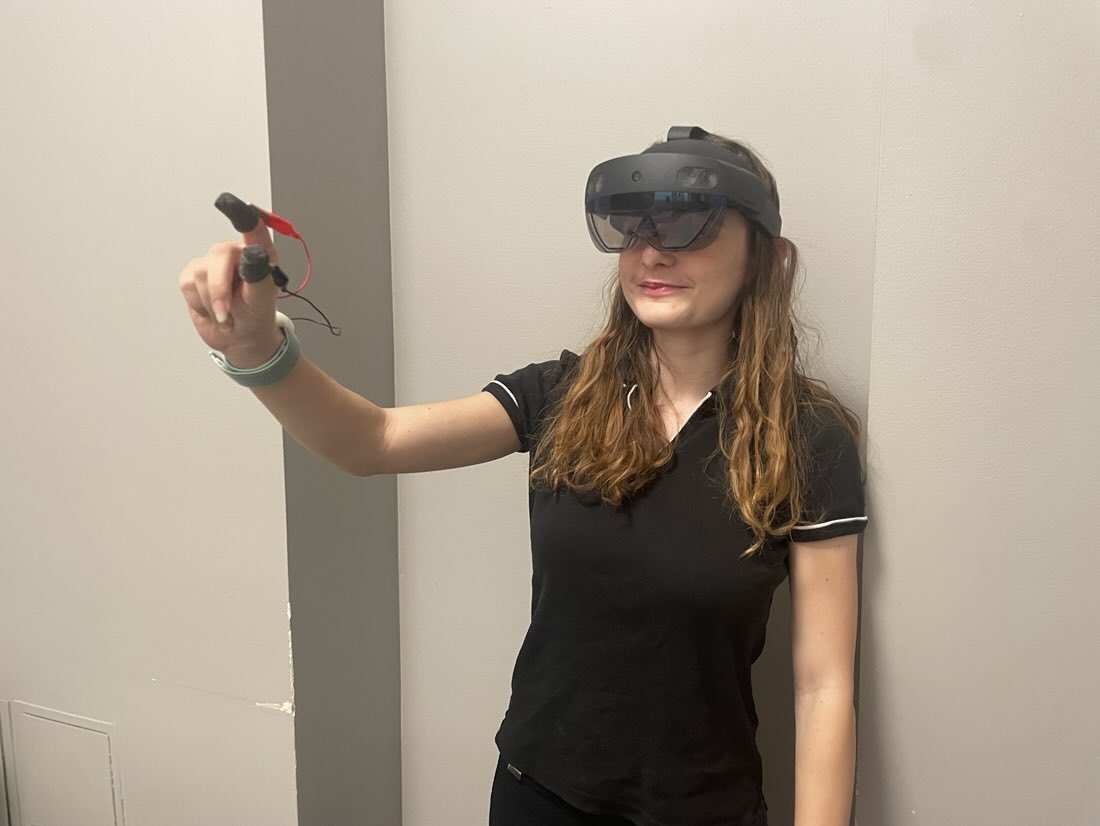
Wearing a HoloLens headset and reaching out to a virtual interface, sensors on two fingers.
Skywalk Internship: me using the VR app I made
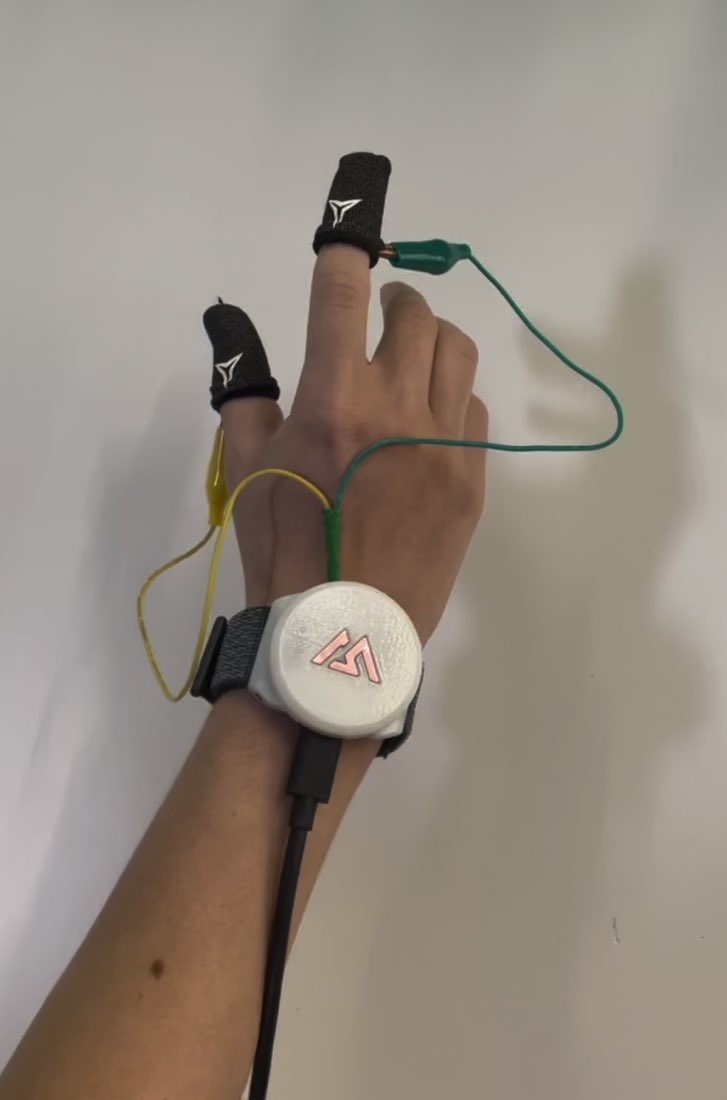
A raised hand wearing Skywalk's second wristworn prototype: a white puck with a glowing logo, wired to sensors on two fingertips.
Skywalk Internship: me with the wristworn device we made
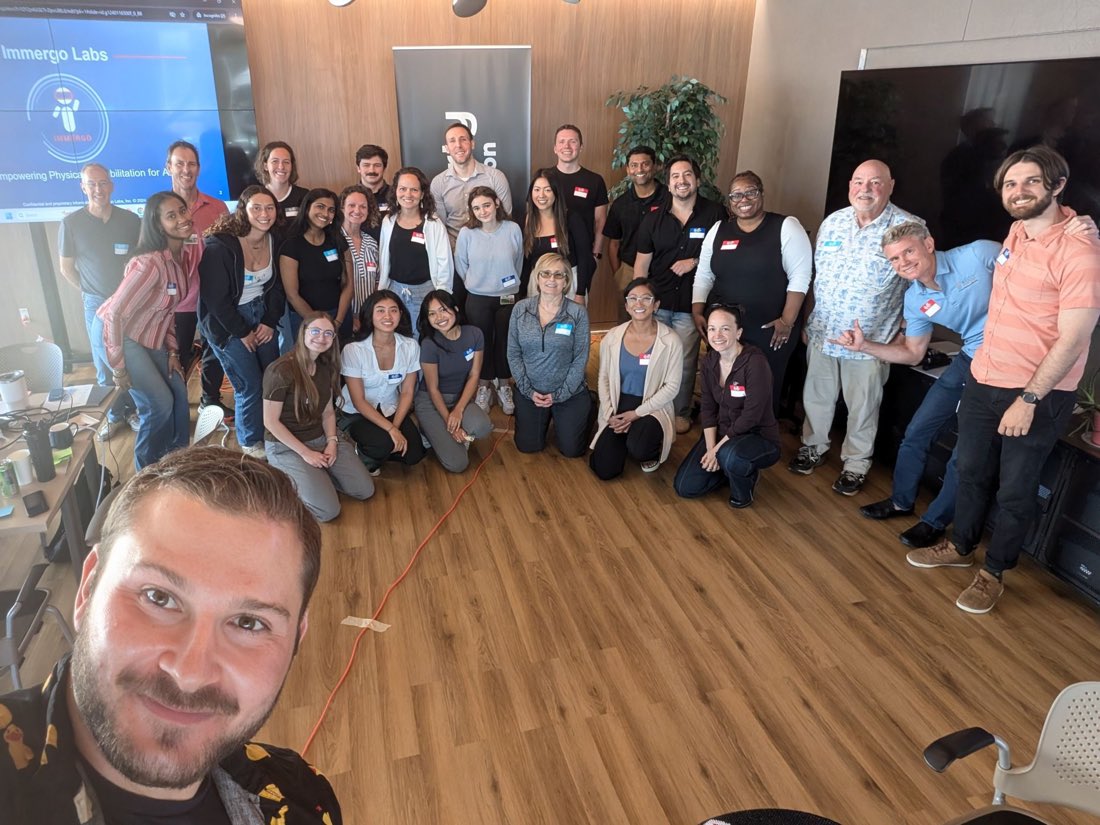
A large group photo of the Immergo Labs team in a conference room, the Immergo Labs title slide on the screen behind them.
Immergo Labs Internship: our team after hosting our first VR physical therapy user study
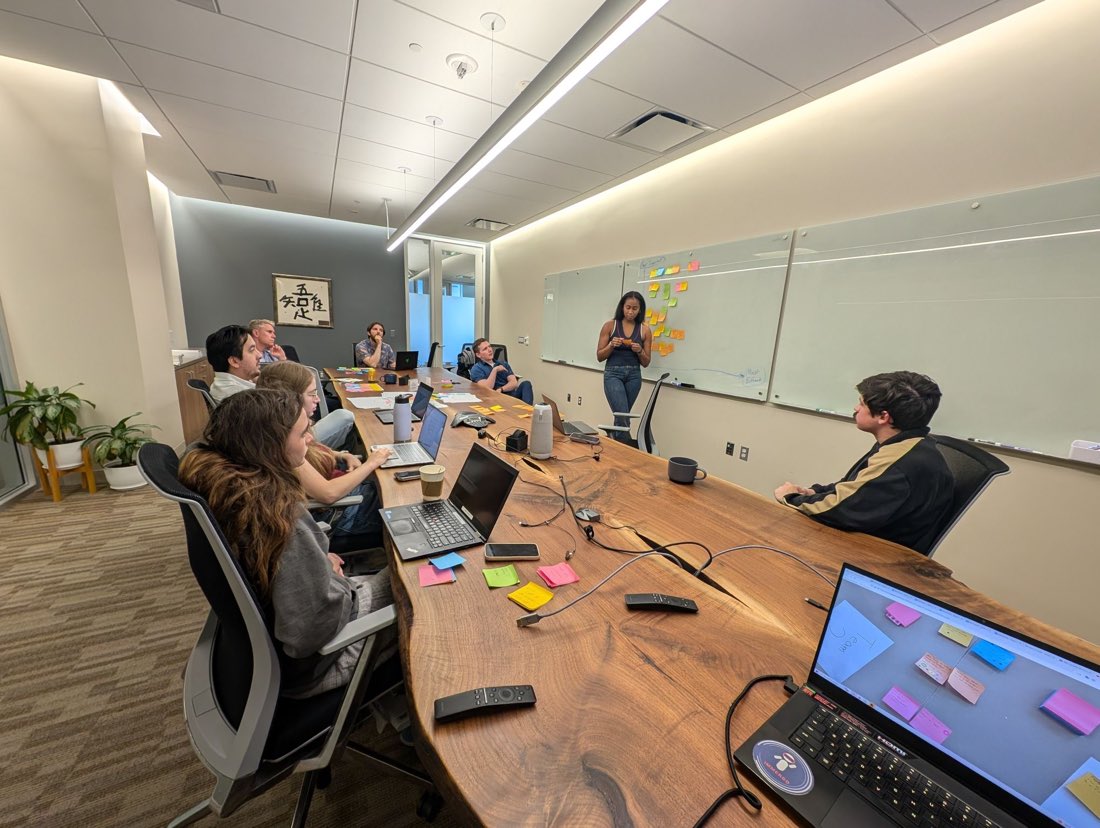
The Immergo Labs team around a long wooden conference table, one member presenting at a whiteboard covered in sticky notes.
Immergo Labs Internship: our team planning our VR physical therapy user study
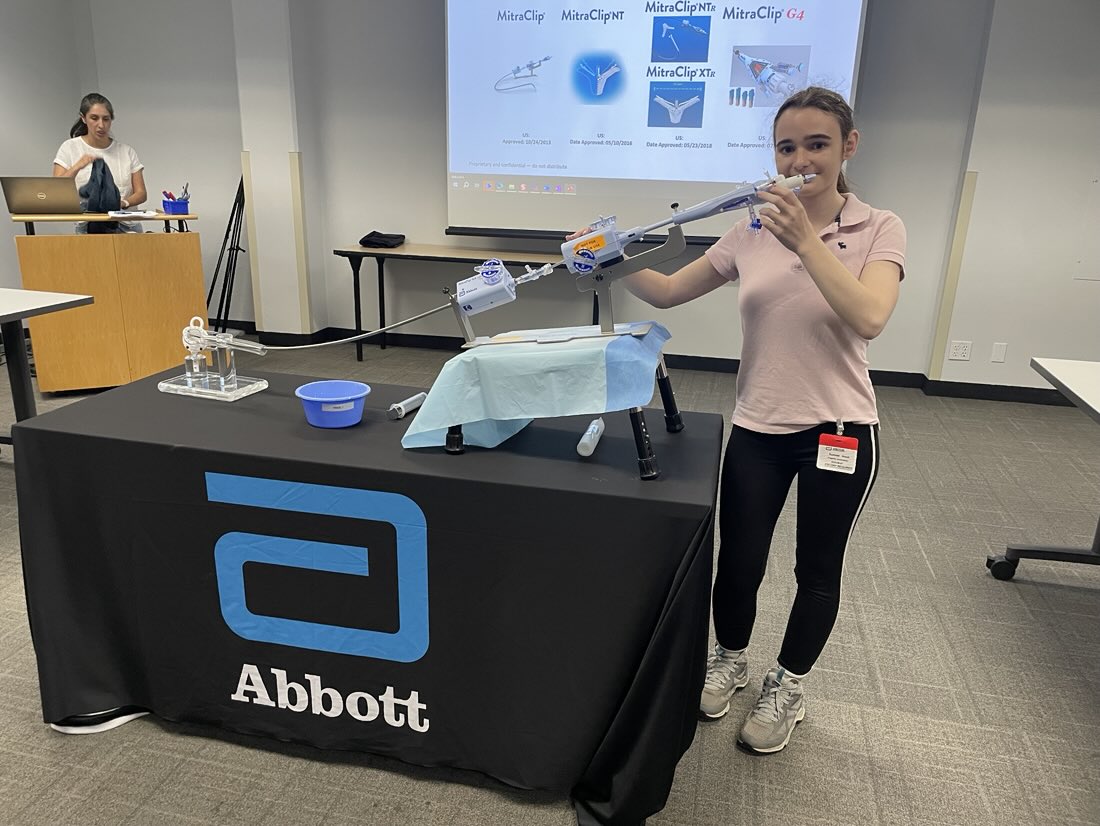
Demonstrating an Abbott MitraClip delivery system on a training stand, the device's generations on the slide behind.
Abbott Laboratories: demoing the MitraClip delivery system
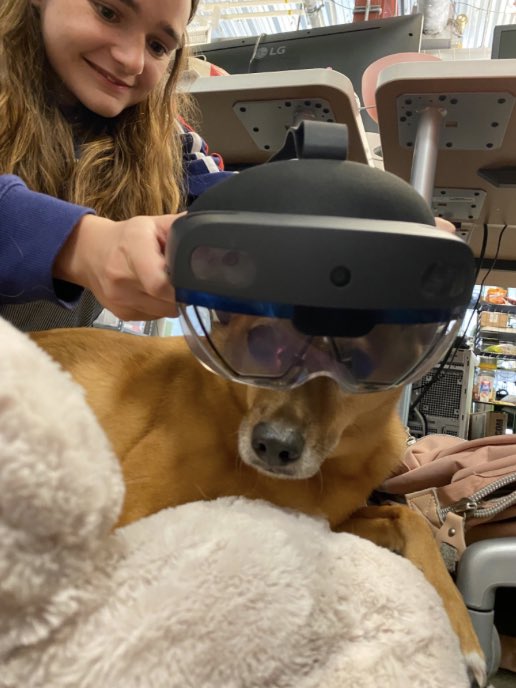
Holding a HoloLens headset over the eyes of Skrilla, a small tan dog curled up on a fluffy blanket.
Skywalk Internship: Skrilla the dog trying out the VR app I made
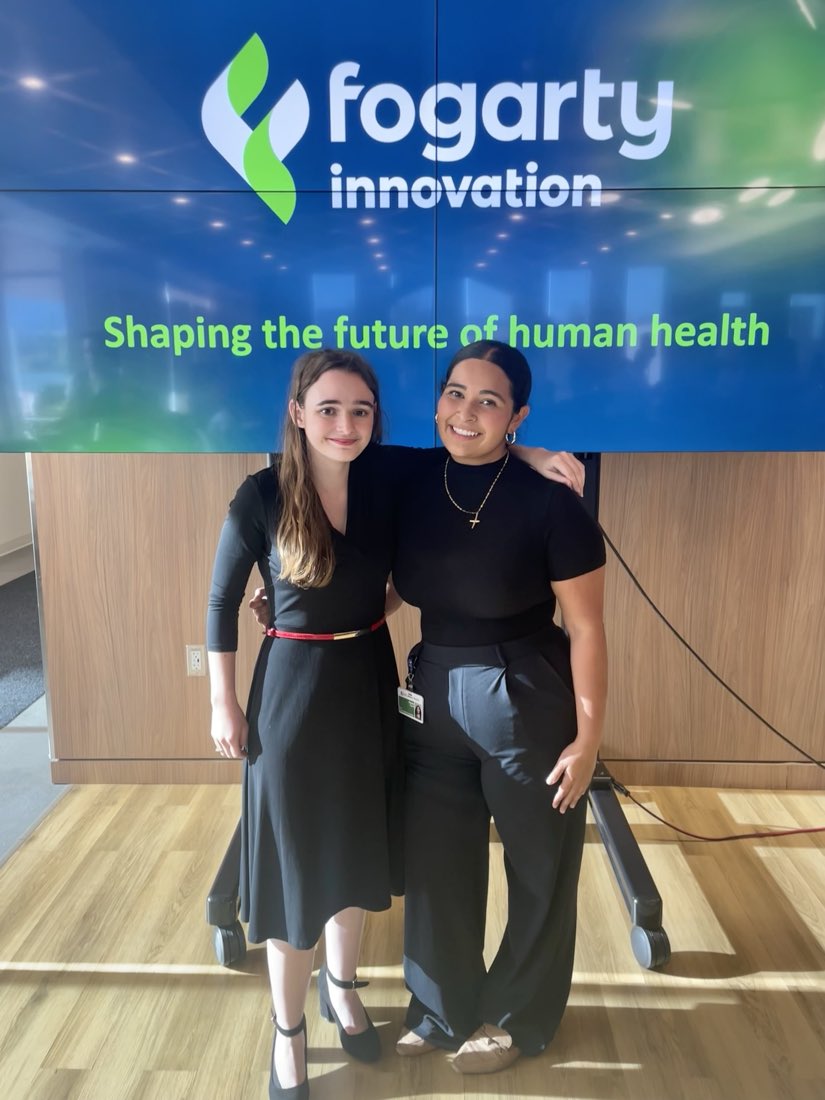
Arm in arm with a colleague in front of a Fogarty Innovation screen reading “Shaping the future of human health.”
Fogarty Innovation Internship: me after giving my final presentation
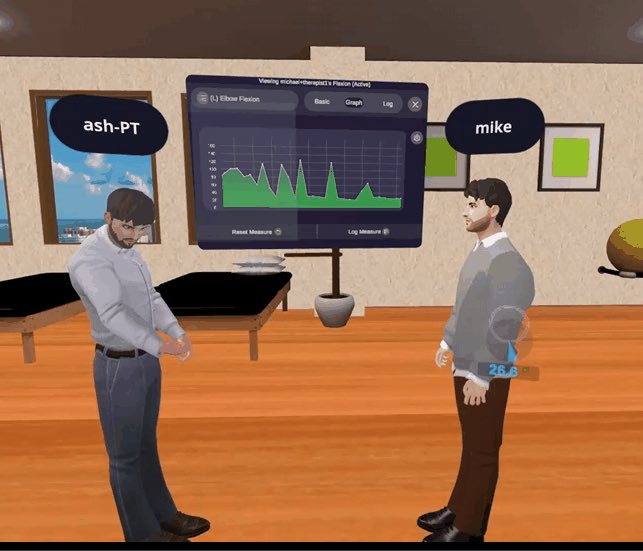
Two avatars, “ash-PT” and “mike,” standing in a virtual therapy clinic beside a floating panel graphing elbow flexion.
Immergo Labs Internship: company founders interacting in the VR environment I made
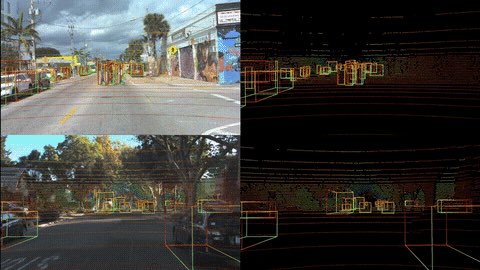
Four panels of sensor data from an Argo AI vehicle: two street camera feeds and their lidar point clouds, with detected cars and objects outlined in 3D boxes.
Argo AI Internship: autonomous vehicle collecting sensor data for my diagnostic app

Product Manager

Inspirit AI

2025 — Present

Inspirit AI Scholars is an artificial intelligence education program for high school students, developed by Stanford and MIT alumni and graduate students.

  • Built interactive web applications, Jupyter notebooks, and technical curricula to teach AI concepts

  • Lead technical product operations, directly managing 200+ employees, running performance evaluations, allocating work, and advising teams on research direction, technical roadblocks, and client escalations.

  • Built python scripts to automate high-volume manual workflows including project matching, creation and archival of project Slack channels, and enrollment of thousands of students across course platforms.

  • Served as an on-call software engineer for urgent software bug fixes.

Software Engineer Intern

Melio

2024

Melio is a biotechnology company that builds rapid, culture-free diagnostic platforms to detect bloodborne pathogens and bloodstream infections. Melio is a Fogarty Innovation portfolio company.

  • Developed an optimization algorithm for PCR primer selection to maximize the differences between melt curves of different pathogens while minimizing the differences of melt curves generated by different strains of the same species.

  • Performed DNA sequence alignment and consensus sequencing across the platform's target pathogen panel to characterize phylogenetic relatedness between species, flagging closely related organisms at elevated risk of misclassification.

  • Worked with the ML team to diagnose patients from the melt-curve profile of a blood sample.

Software Engineer Intern

Immergo Labs

2024

Immergo Labs is an NSF-funded digital health company that builds an extended reality (XR) and AI-powered platform for physical rehabilitation and remote movement care. Immergo Labs is a Fogarty Innovation portfolio company.

  • Developed immersive virtual environments in Unity for a VR telehealth platform. My goal was to create fun and relaxing environments where the patients feel comfortable and at ease.

  • Turned prescribed rehab movement into guided sessions patients complete inside the headset.

  • Helped organize and run a 20-person user study comprised of physical therapy patients and clinicians from across the United States who tried out our XR app and provided feedback. I subsequently worked with the team to triage the feedback and create a plan for integrating the most urgent changes.

Medical Technology Lefteroff Intern

Fogarty Innovation

2024

Fogarty Innovation is an action-oriented nonprofit organization that advances human health by accelerating medtech innovation from concept to clinical impact. Melio and Immergo Labs are Fogarty portfolio companies.

  • Consulted on the biodesign process: how a clinical need is identified and characterized before anyone designs the device that answers it.

  • Learned about regulatory strategy, patents, commercialization of medical technology, and the path a device takes from a working prototype to something a hospital can actually buy.

Software Engineer & Data Science Intern

Skywalk

2023

Skywalk is a software and deep-technology development company focused on building computing devices and specialized software, such as a voicebuds audio device and assistive wrist-worn devices for interfacing with technology.

  • Developed signal-quality algorithms to detect artifact-corrupted channels from wrist-worn optical EMG sensors: benchmarked a root-mean-square successive-difference method, diagnosed its high false-positive rate, and replaced it with a variance-based detector whose threshold is normalized by the ratio of optical signal to power output.

  • Designed and executed a 100-participant user study to generate training data for the company's ML models. As part of the study, I built a Unity application for the Microsoft HoloLens AR environment for participants. Participants completed various tasks in the process of completing games in the AR application, and I collected their EMG data in the process.

  • Authored Python processing pipelines to prepare study data for model training including: automating header labeling, detecting and removing corrupted files, and standardizing the data across participants.

Software Engineer Intern

Argo AI

2022

Argo AI was an autonomous driving technology company backed by Ford, Volkswagen, Lyft, and Walmart. I worked on the System Fault Detection & Management team.

  • Built a Python tool that extracts diagnostic signals from autonomous vehicle logs and renders them as time-series visualizations, with cross-vehicle and cross-signal comparison, time-window filtering, and threshold-based queries. This tools allowed employees to visually see what information all of the car's sensors were receiving at the time of an incident with the car. This replaced a workflow that had previosuly been manual and very tedious.

  • Broadened access to that tooling company-wide by removing the prerequisite of Python scripting expertise, letting non-engineering employees analyze and compare log data across multiple vehicles and trips on their own.

  • Developed a C++ front-end that unified the safety and diagnostics team's fragmented internal tooling into a single entry point: users pose a diagnostic question, and the program routes to the appropriate underlying tool, prompts for any missing parameters, and executes it against their data. This made tools previously known only within the team usable across the organization.

  • Generated and processed new data for the ML team's fault-detection models.

Teacher

2021 — Present

  • A Breakout Mentors: Taught students ages 8-12 the fundamentals of computer science and programming/

  • At Peninsula Tutoring: Tutored students ages 8-18 in AP Computer Science, AP Calculus, trigonometry, AP Phyiscs, AP Biology, and AP Chemistry

  • At Harker School: Taught an AI course to high school students.

  • At Nueva School: Taught an AI course to high school students and an introductory AI course to middle school students.

  • At Phillips Academy Exeter: Taught a generative AI course to high school seniors.

Skills

LANGUAGES

PythonC++CSwiftJava

MACHINE LEARNING

Machine learningDeep learningLLMsSignal processingComputer visionData analysis

FRAMEWORKS & PLATFORMS

VS CodeCursorUnityApple HealthKitGoogle Colab

DOMAINS

Clinical NLPMedical imagingBiosignalsDigital healthComputational biologyAutonomous vehicles

Research

Boussard Lab

Research Assistant

2024 — 2025

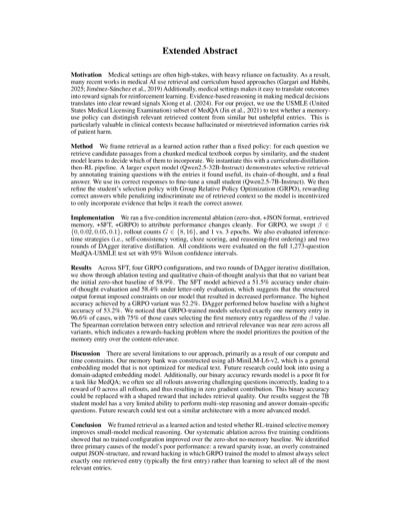
Finding chemotherapy's hidden side effects in the notes

An end-to-end machine learning pipeline for early identification of chemotherapy-induced neurotoxicity from the clinical text. My research specifically focused on chemotherapy-induced peripheral neurotoxicity (CIPN) and cancer-related cognitive impairment (CRCI).

The clinical problem

Chemotherapy can leave patients with nerve damage (CIPN) and cognitive impairment (CRCI), and both are severely under-reported. There is no standardized test for either, most symptoms depend on the patient reporting them, and physicians document them inconsistently, so administrative code counts underestimate how often cases of neurotoxicity occur. Physicians often note the symptoms in the patient's file, but rarely diagnose neurotoxity explciitly with an ICD code. If the record says it does not happen often, researchers are less liekly to study it, screens for it, or treats it early.

The gap

No existing work showed how to extract neurotoxicity symptoms from clinical notes with LLMs, and existing chemotherapy risk models do not target neurotoxicity specifically. My initial hypothesis: we can extract neurotoxicty symptoms from clinical notes and build a model to estimate the probability that a given patient develops neurotoxicity after treatment.

The cohort

Adults in the Stanford Health Care database with a solid tumor at any stage who started chemotherapy between 2014 and 2024: 27,950 patients. Solid tumors make up about 90% of adult cancers and are treated differently from blood cancers. A patient counts as positive when an ICD-10 code for drug-induced polyneuropathy (G62.0) or cognitive symptoms (R41.89) appears within three months of starting chemotherapy, the window in which symptoms typically emerge. The 302 patients already diagnosed in the three months before treatment were excluded, so the positives reflect neurotoxicity that follows chemotherapy rather than predates it.

The approach

The system reads the notes instead of the codes. For positive cases it takes the progress, H&P, telephone encounter, and emergency department notes written between the start of first-line chemotherapy and the diagnosis; for negative cases, a random few per patient that do not explicitly mention neurotoxicity. Most of any note is irrelevant, so a retrieval pipeline called CLEAR narrows it first. Rather than embedding whole notes, it splits them into topic-focused chunks, keeps the clinical entities relevant to neurotoxicity, expands that list with ontologies and an LLM, and returns only the chunks tied to those entities. GPT-4o then labels the symptoms in those chunks zero-shot. No labeled training corpus is required, which is what makes it portable to a new site or a new cohort.

Clinical validation

Once the labeling scheme was finalized, Dr. Mohana Roy reviewed the LLM's output against the notes, so the labels are clinician-validated rather than model-asserted. That gives a way to count neurotoxicity from what clinicians actually wrote, not only from what was coded, which is the groundwork for earlier screening and for trials that can measure it.

Predicting it before treatment

On top of those labels, built models that flag patients at elevated risk of chemotherapy-induced neurotoxicity before treatment begins, so physicians can weigh that risk when recommending a regimen. Compared candidate models on hazard ratios, correlated features, and clinical impact, and wrote the model cards that document performance, fairness, and limitations — the interpretability record a model needs before anyone can use it in a clinic.

Alongside

Develops supervised models across data modalities to identify factors that influence cancer progression and treatment response, and studies treatment response in relation to neuronal activity, linking signal-level features to patient outcomes.

PIPELINE

University of Oxford

Research tutorial, computational neuroscience

2024

Computational Neuroscience Research Tutorial

Completed under the mentorship of Dr. Juan Galeazzi while studying abroad at Oxford University.

Foundations

How the brain is organized, from Brodmann's localisation of the cerebral cortex to its functional anatomy; the research methods neuroscience depends on; and how the brain should be modeled, working from Dayan and Abbott's Theoretical Neuroscience.

Vision and movement

Computational modeling of human vision, then the processes involved in voluntary movement, from planning an action to carrying it out.

Memory and learning

The structures that contribute to different types of memory, then the mechanisms of learning. The readings ran from Pavlov's conditioned reflexes and the Skinner–Konorski debate over two types of conditioned reflex, through Tolman, two-process learning theory, and Pavlovian-to-instrumental transfer, to the dopamine reward prediction error that links conditioning to reinforcement learning (Schultz, Dayan & Montague, 1997).

Large-scale neural recordings

Making sense of high-dimensional data from recordings of many neurons at once: dimensionality reduction for neural populations (Cunningham & Yu, 2014; Humphries, 2021), context-dependent computation by recurrent dynamics in prefrontal cortex (Mante et al., 2013), and the new insights needed to link large-scale recordings to behavior (Urai et al., 2022).

Wernig Lab

Research Assistant

2021 — 2023

Reprogramming microglia, and induced neurons that integrate

Bench work on how induced neurons functionally integrate into neural systems, and on disease mechanisms and therapeutic approaches in Alzheimer's.

Cell reprogramming

Studied the reprogramming potential of microglia and how induced neurons functionally integrate into neural systems.

Alzheimer's disease

Investigated therapeutic approaches and disease mechanisms in Alzheimer's Disease, and therapeutic methods for neurological patients.

Davis & Mercier Labs

Research Assistant

2014 — 2016

Fractones, and where they turn up in Alzheimer's

Early bench work on fractones — then newly discovered structures in the stem cell niche — and the finding that they appear in the β-amyloid plaques of Alzheimer's patients.

The structures

Fractones are specialized structures in the stem cell niche that bind neuronal growth factors, and through that binding control whether stem cells proliferate or differentiate. They had only just been described when this work started.

The finding

The research showed that fractones are present in the β-amyloid plaques found in the brains of Alzheimer's Disease patients — placing a growth-factor-binding structure inside the hallmark lesion of the disease.

Honors & Awards

  1. 2025

    Decision Making Under Uncertainty, Stanford

    1st place — best project

    Graduate-level course award for the strongest final project. My project partner and I created three reinforcement learning agents to optimally play the game of Exploding Kittens: an MLE agent with value iteration, Q-Learning agent, and a Bayesian agent. We created a webapp where users can play against the agents.

  2. 2023

    health{hacks}, Stanford University

    1st place — Aging & Longevity

    Post-operative monitoring for hip and knee replacement patients. We created a convolutional classifier for wound photographs that pairs with Apple Watch biometric data to predict a patient's surgical site infection risk.

  3. 2021-2025

    Tau Beta Pi

    Member

    The engineering honor society. Members are elected by having a GPA in the top 10% of GPAs among engineering undergraduates and fulfilling community service requirements.

  4. 2021

    Boothe Prize Finalist

    Award

    All Stanford students are required to complete PWR 1, a course that engages students in the serious practice of academic analysis, college level research, and argument. My PWR 1 class was about social and tehcnological change. The Boothe Prize finalists are the students whom the faculty deemed to have the best PWR 1 essay of the class.

  5. 2020

    Genius Olympiad

    2nd place — national

    A project competition judged on scientific work aimed at environmental problems.

  6. 2020

    Diamond Challenge

    3rd place — international

    An entrepreneurship competition that takes a venture from pitch through to a defended business case.

  7. 2020

    Girls Go CyberStart

    National qualifier

    Cybersecurity challenge series. I advanced to the national round, but did not compete in the national competition due to COVID-19.

  8. 2018

    US Army eCybermission

    National winner — STEM-in-Action Grant

    Federal funding awarded to carry a student research project into the community.

Silly Little Side Projects

Memory-as-Action

A five-stage pipeline — memory bank construction, retrieval, expert annotation, SFT warm-start, then GRPO — that distills a 32B teacher into a 7B model which learns to reach for medical textbook entries while answering USMLE questions.

Retrieval normally gets bolted on as a fixed step that always fires. Here it is an action the model chooses, so the interesting question becomes when a small model decides it needs to look something up. Ablated against self-consistency voting, cloze scoring, and DAgger distillation.

RAGSFTGRPOModel distillationMedical QA

Paper (PDF)

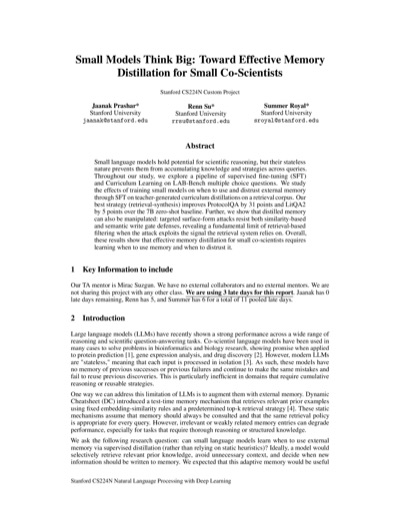
Memory Distillation

Trains small language models to know when to distrust their own retrieved memory, using supervised fine-tuning and curriculum learning over teacher-generated distillations of a retrieval corpus.

The best curriculum moved ProtocolQA 31 points and LitQA2 5 points over the 7B zero-shot baseline on LAB-Bench. It also has a limit worth stating out loud: targeted surface-form attacks defeat both similarity-based and semantic write-gate defenses, because they exploit the exact signal retrieval depends on.

SFTCurriculum learningLAB-BenchAdversarial robustness

Paper (PDF)

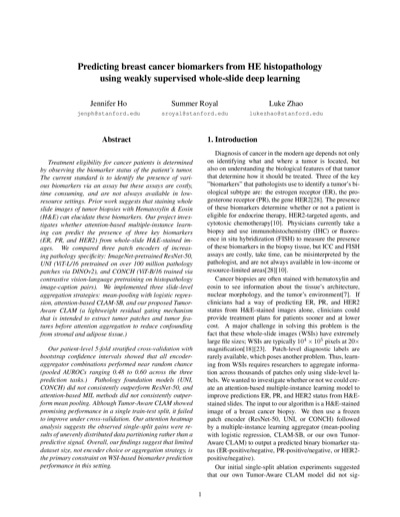
Biomarkers from Slides

Asks whether attention-based multiple-instance learning can read ER, PR, and HER2 status off H&E-stained whole-slide images — the cheap stain every case already gets — instead of the assays that gate cancer treatment eligibility.

Benchmarked three patch encoders (ResNet-50, UNI, CONCH) against three aggregation strategies, including a proposed Tumor-Aware CLAM with residual gating. Patient-level 5-fold cross-validation with bootstrap confidence intervals returned the unglamorous answer: dataset size is the binding constraint, not the architecture.

Attention MILCLAMUNICONCHDigital pathology

Paper (PDF)

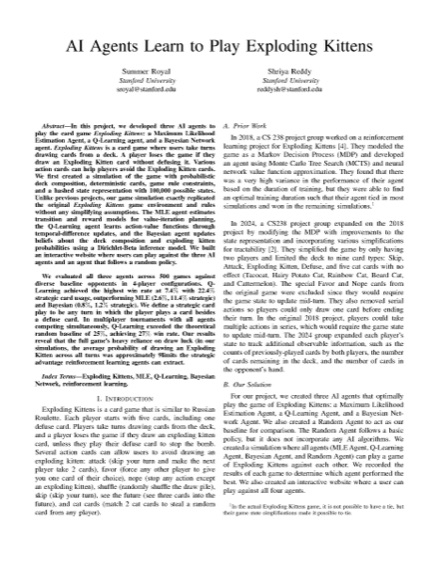
Exploding Kittens Agents

A full-fidelity simulation of the card game — roughly 100,000 hashed states, no simplifying assumptions — and three agents competing inside it: MLE with value iteration, Q-Learning with temporal-difference updates, and a Bayesian agent doing Dirichlet-Beta inference over deck composition.

Q-Learning led at a 7.4% win rate over 500 games and 27% in all-agent tournaments, against a 25% random baseline. The better result is the explanation for that ceiling: the game's ~9% per-turn draw risk caps how much advantage any policy can extract. There is a site where you can play all three.

Q-LearningValue iterationBayesian inferencePython

Paper (PDF)

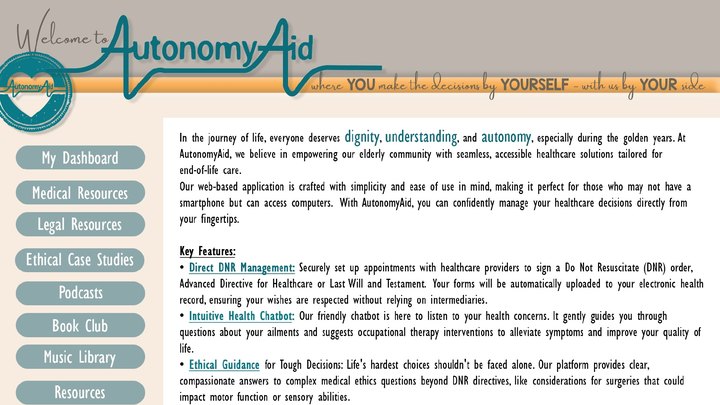
AutonomyAid

A web-based platform that helps older adults document and enforce their own end-of-life care decisions. Roughly 58 million Americans are over 65, and a large share reach the final stage of life without an advance directive or healthcare power of attorney — a documentation gap that transfers authority from the patient to surrogates, courts, and ethics committees.

I designed AutonomyAid to close it by combining three things usually kept separate: scheduled execution of DNRs and advance directives with automatic upload to the patient's electronic health record, free customizable legal templates, and plain-language ethical education built around real cases. I deliberately built for the browser rather than mobile, since much of this population has computer access but no smartphone, and since arthritis and degenerative vision conditions make small touch targets a genuine barrier. The platform also layers in podcasts, a book club, and games — a response to the documented link between social isolation and cognitive decline, and the mechanism that turns a one-time paperwork task into a reason to return.

Web appAccessibilityEHR integrationAdvance care planningMedical ethics

Paper (PDF)

HipTracks

An iOS app that watches hip and knee replacement patients recover, pairing Apple Watch biometrics with a convolutional classifier that reads wound photographs and predicts surgical site infection risk.

Infections after joint replacement get caught at the follow-up appointment, which is often days later than the wound and the vitals first drift. Led the front end in Swift and wired the backend through CardinalKit and Apple HealthKit. Built at health{hacks} and kept going after.

SwiftCNNTransfer learningCardinalKitHealthKit

Slides

NeuroTrack

A hardware-plus-software system that helps neurologists track disease progression through repeated reaction-time measurement. Neurological conditions affect more than one in three people worldwide and are the leading cause of illness and disability, but Parkinson's in particular is held back by the absence of early-detection methods and any practical way to monitor progression or therapeutic response between visits.

Our team built an Arduino Giga R1 rig — two buttons, two LEDs — that runs a ten-trial reaction sequence and captures both press latency and button hold duration, then feeds those measurements into a web platform where clinicians manage a patient roster, run tests, and view longitudinal charts plotting each patient against healthy and Parkinson's baselines. I worked on the classification layer, where we compared a Naive Bayes model against a RandomForest classifier trained on reaction-time results alongside medical history, lab results, and reported symptoms; the RandomForest handled non-linear feature relationships better and did not require the independence assumption, and we reached 86% accuracy. The system targets a $145M U.S. market driven largely by redundant post-operative visits that better longitudinal data would prevent.

ArduinoNaive BayesRandom forestWeb appParkinson's disease

Slides (PDF)

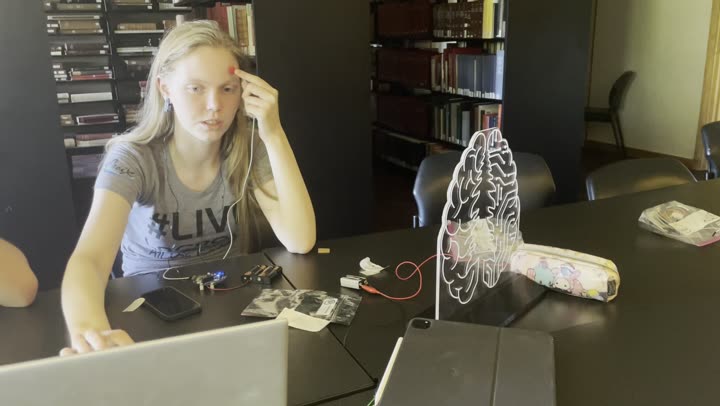
Two people at a library table wearing EEG electrodes, concentrating on an acrylic brain-shaped lamp wired to a breadboard.

Mind-Controlled Lightbulb

A lightbulb switched by thought alone, built through Stanford's Brain-Computer Interface club: an EEG electrode reads the wearer, and the software decides when they meant it.

Wrote the data collection and signal processing halves — the part that has to get from a noisy scalp electrode to a decision clean enough to act on.

EEGSignal processingPythonBCI

Climate Mind

An app that lets people explore how the things they personally value are being affected by climate change.

Trained the model underneath it: it processes incoming news articles continuously, filters for the factual content, and pulls out the cause-and-effect relationships. The longer aim is for something like it to run inside social platforms and mark false information where people actually meet it.

NLPCausal extractionPython

Live

The Foster Tower Tree app icon — cupped hands holding a heart before a Honolulu high-rise, a palm tree, and Diamond Head.

Foster Tower Tree

An app built during the COVID pandemic for the residents of a Honolulu condominium tower, so a neighbour who could not safely leave the building could ask the neighbours who could.

Shopping runs, rides to the doctor, a load of laundry — small asks that were suddenly hard to make of anyone, in a building full of people who would have said yes if they had known. The app was the part that was missing: somewhere to put the ask.

App developmentCommunity software

The Ditch Dat! Head Lice badge — a glum cartoon louse under a stamped wordmark.

Ditch Dat!

A novel pediculicide — a head lice treatment that is eco-friendly, affordable, and patent-pending, because the ones on the shelf are none of those three.

First place at the Hawaii State Science Fair, and federal government funding to prototype it further.

FormulationProduct designPatent-pending

Honolulu Star-Advertiser

Hospital Work

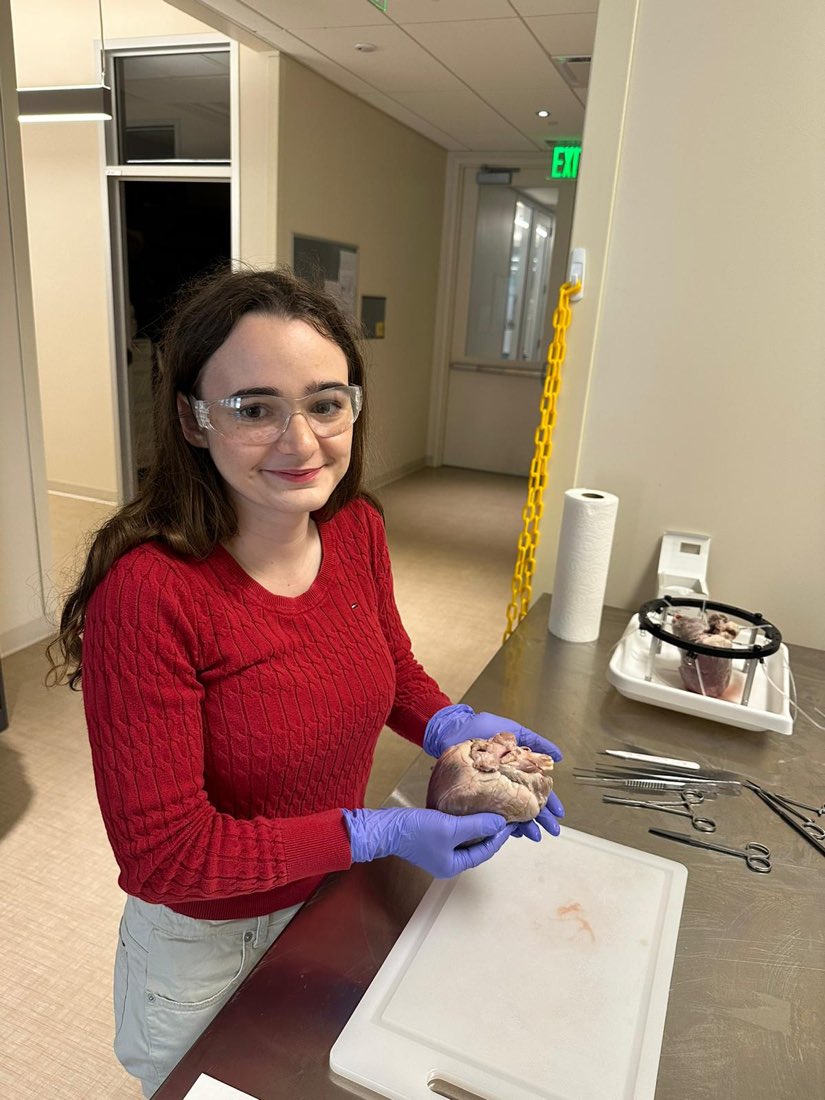
Smiling in safety glasses and purple gloves at a steel dissection table, holding a heart in both hands, instruments laid out alongside.
Heart dissection at El Camino Hospital
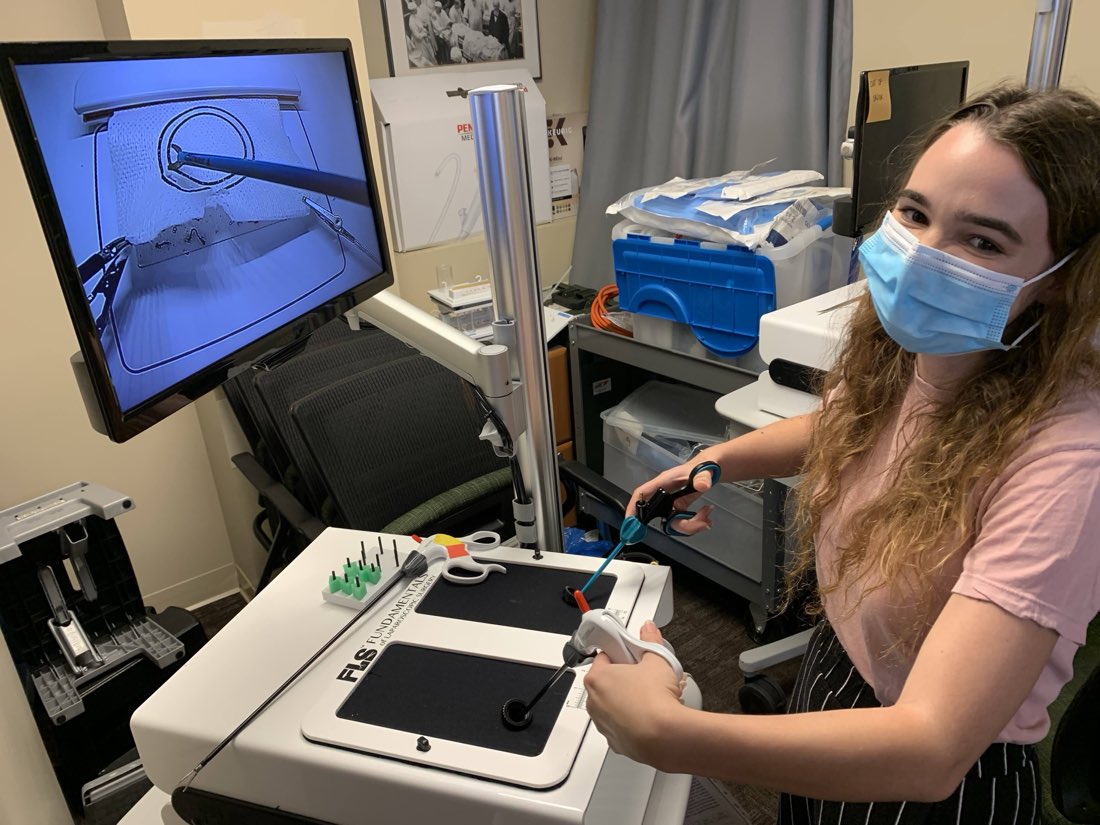
In a surgical mask at a Fundamentals of Laparoscopic Surgery trainer, working two laparoscopic instruments while a monitor beside it shows the camera view inside.
Me doing the simulation & skills training lab for the Fundamentals of Laparoscopic Surgery exam at Stanford Hospital
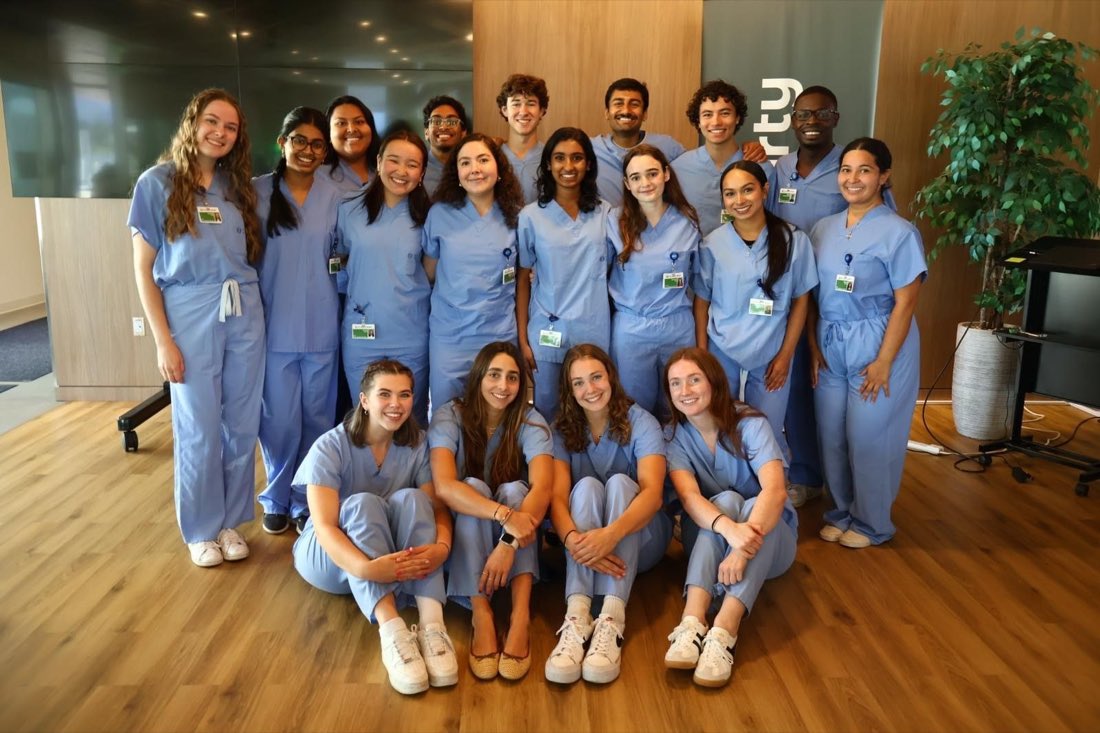
A large group of interns in matching light-blue scrubs posed in a wood-panelled lobby, four of them sitting on the floor in front.
Me and the other interns at El Camino Hospital
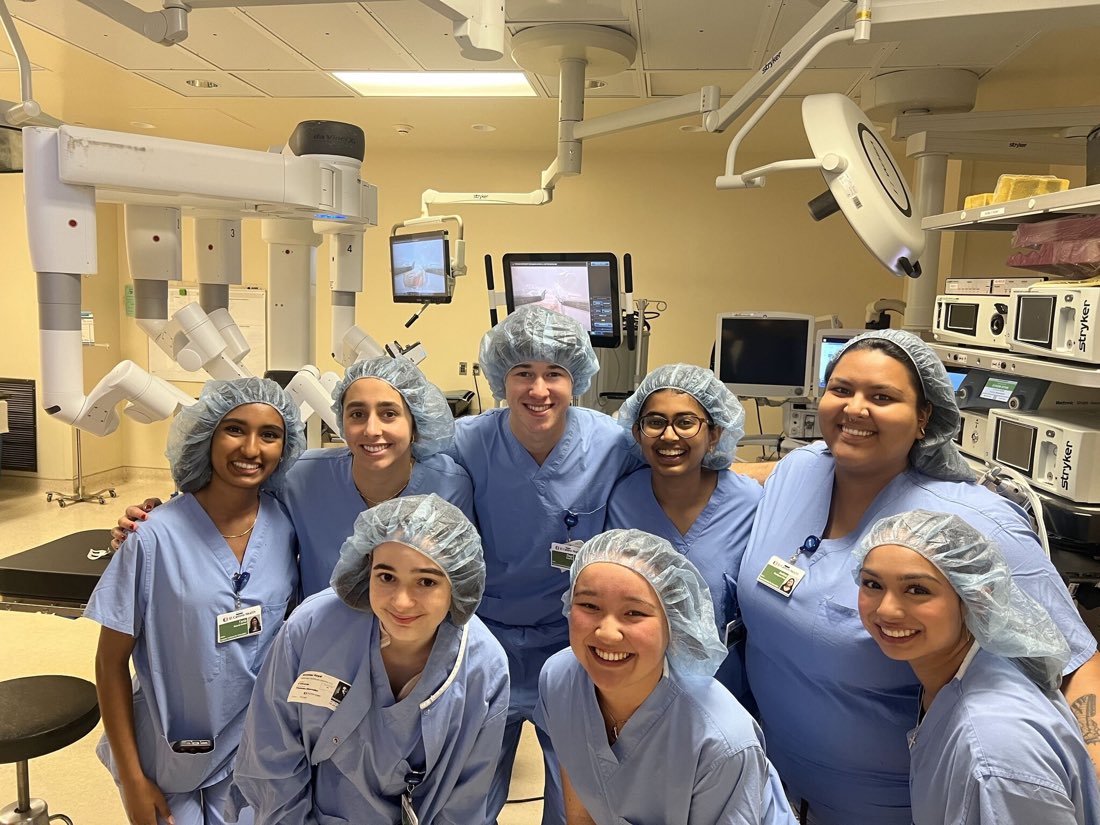
Eight interns in blue scrubs and bouffant caps huddled together in an operating room, the arms of a da Vinci Xi surgical robot behind them.
Me and the other interns after receiving training on the Da Vinci machine at El Camino Hospital
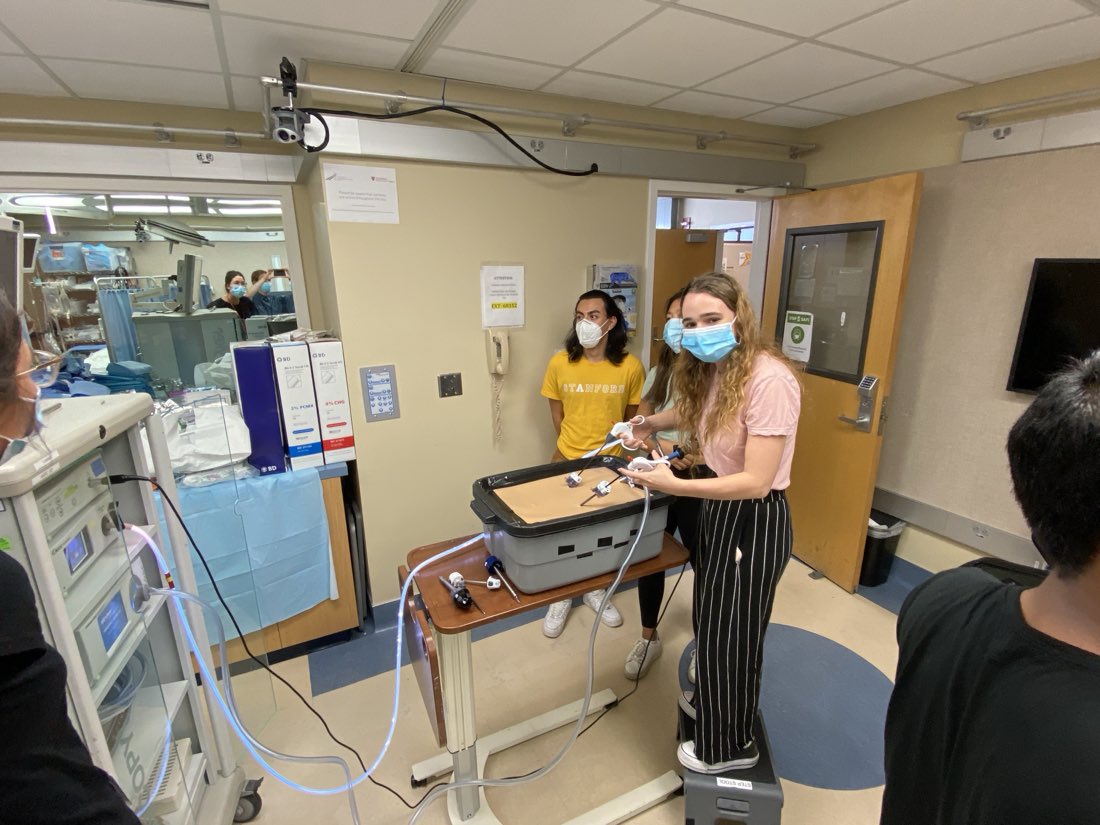
Standing on a step stool in a surgical mask, working laparoscopic instruments through a practice box trainer while other students look on.
Me learning how to do laparoscopic surgery at Stanford Hospital
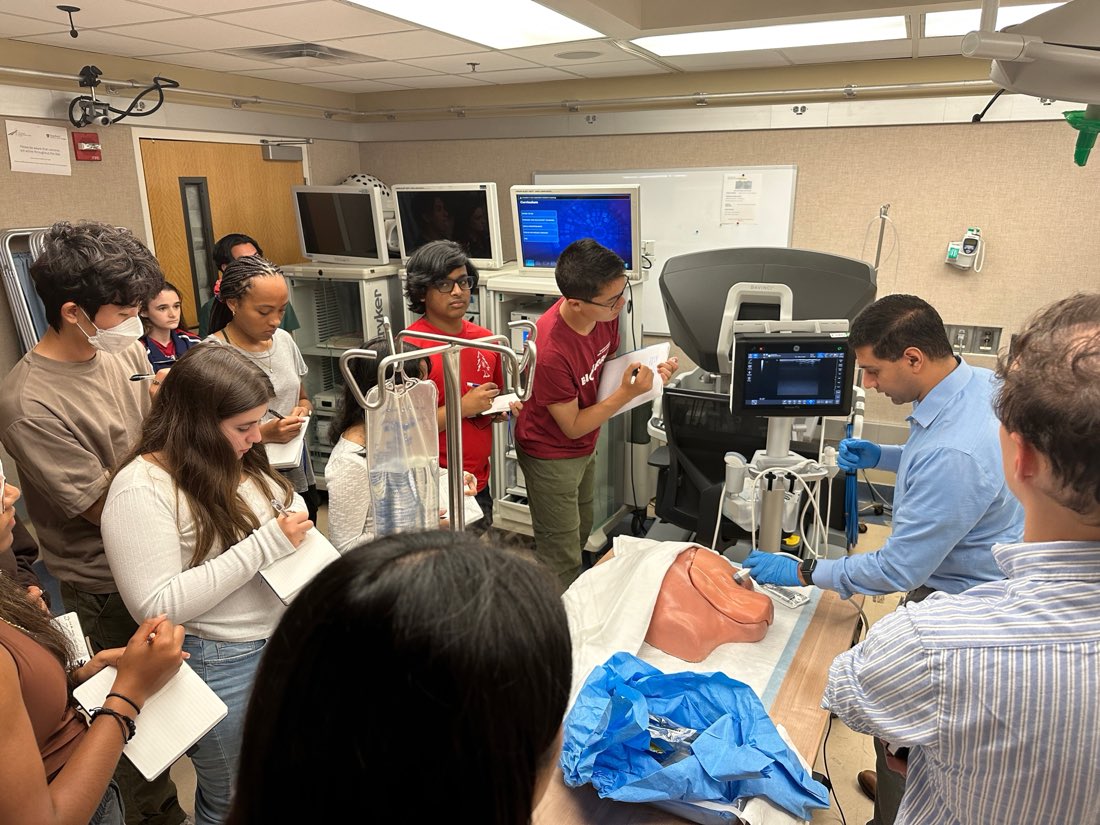
Students taking notes around a simulation mannequin as a surgeon demonstrates an ultrasound probe, a da Vinci console and a bank of monitors behind them.
Me in a medical training simulation lab at Stanford Hospital
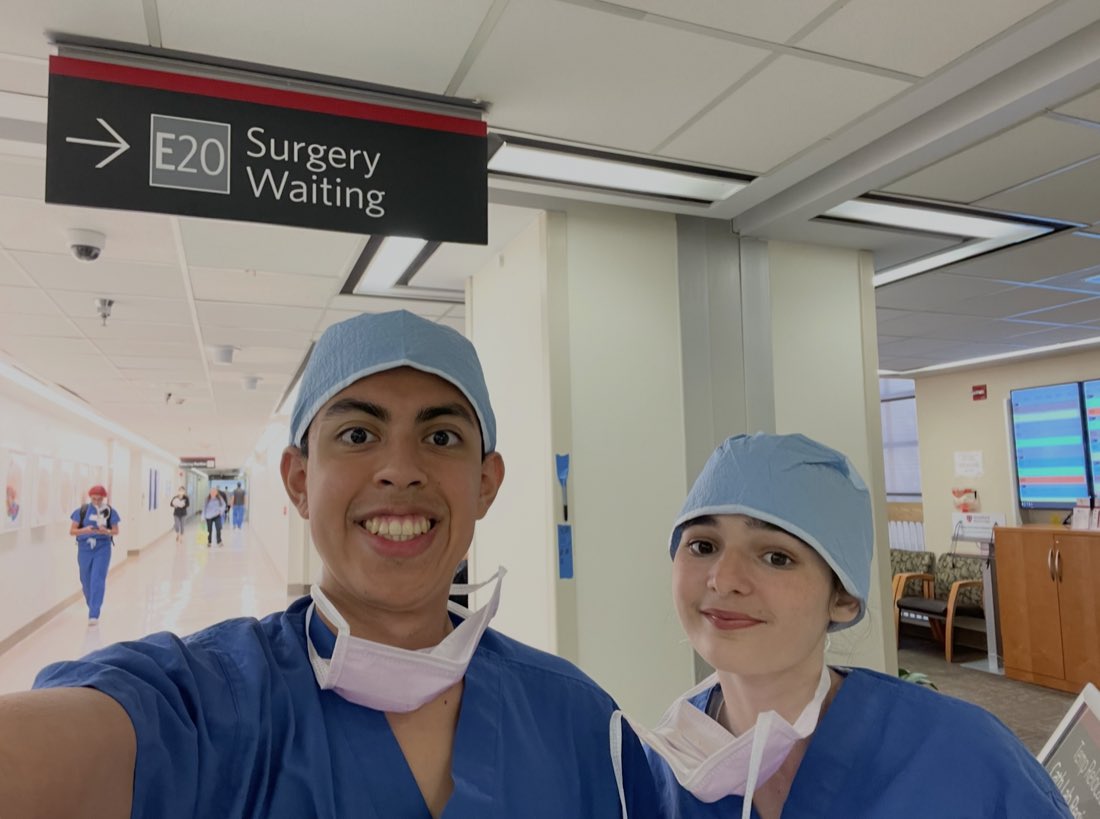
A selfie with a friend in blue scrubs and surgical caps, masks pulled down, under an “E20 Surgery Waiting” sign in a hospital corridor.
Me after shadowing a pediatric cardiothoracic surgery at Lucile Packard Children's Hospital
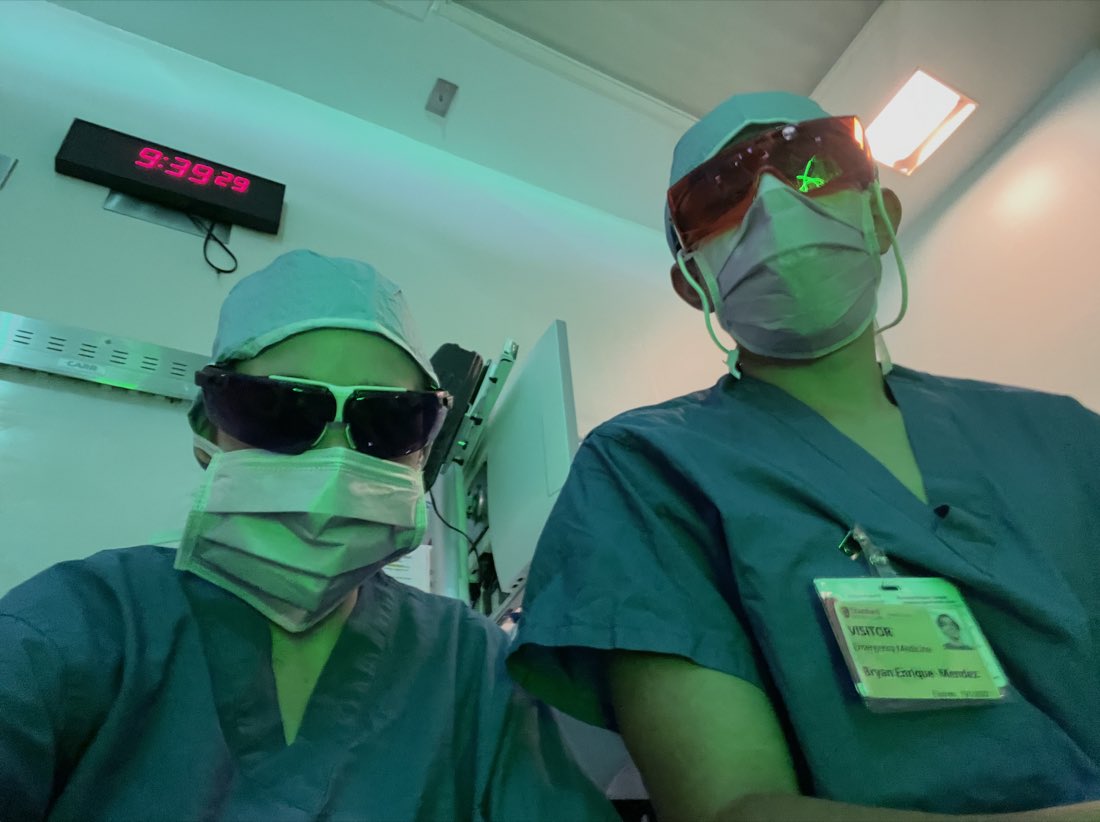
A low-angle selfie in an operating room under green light, in scrubs, a mask and laser-safety glasses beside a colleague, the wall clock reading 9:39.
Me in the OR at Stanford Hospital
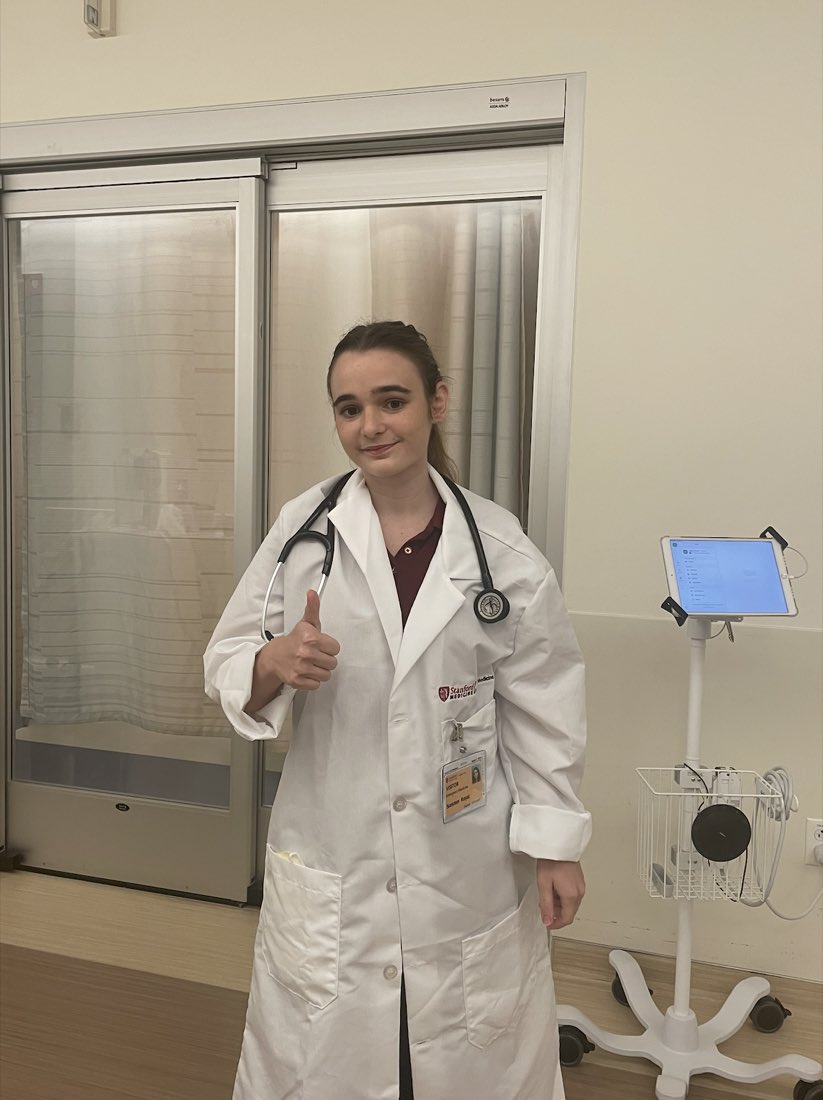
Giving a thumbs up in a white Stanford Medicine coat with a stethoscope around the neck, in an emergency department room.
Me shadowing in the emergency department at Stanford Hospital
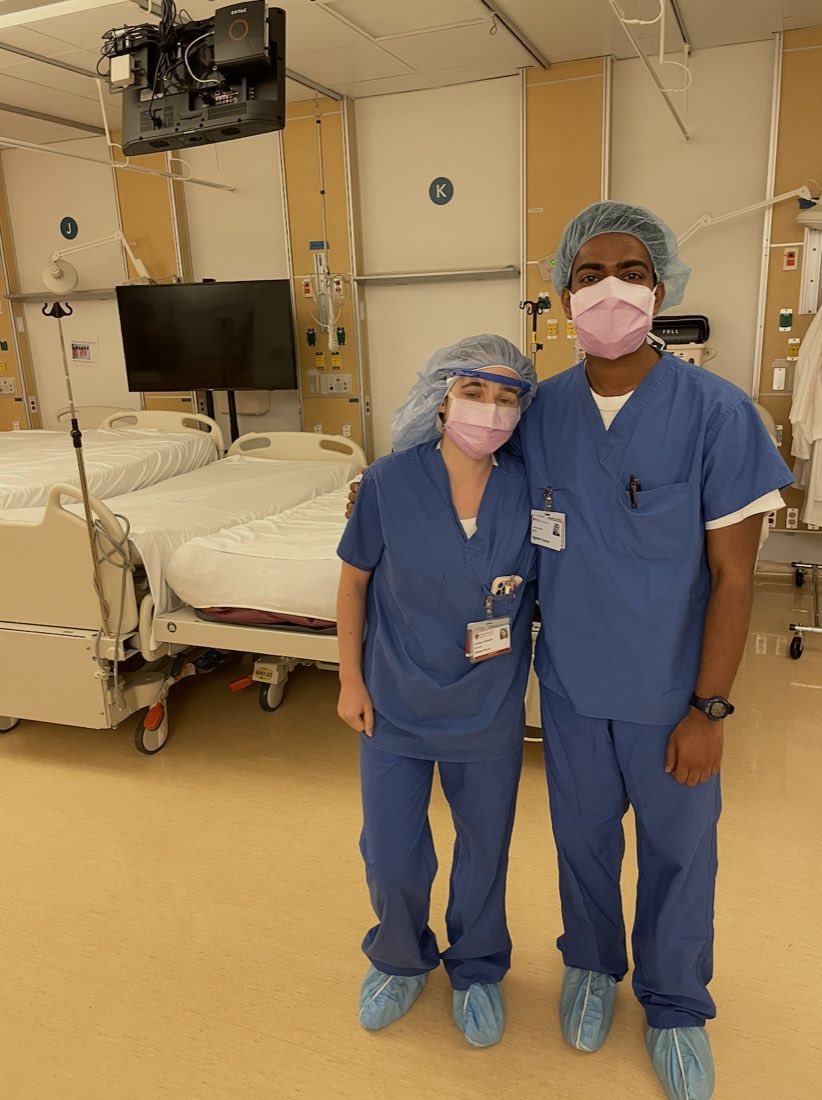
Standing with a colleague in blue scrubs, masks, caps and shoe covers in a hospital ward, empty beds lined up behind them.
Me working a 12 hour shift at Stanford Hospital
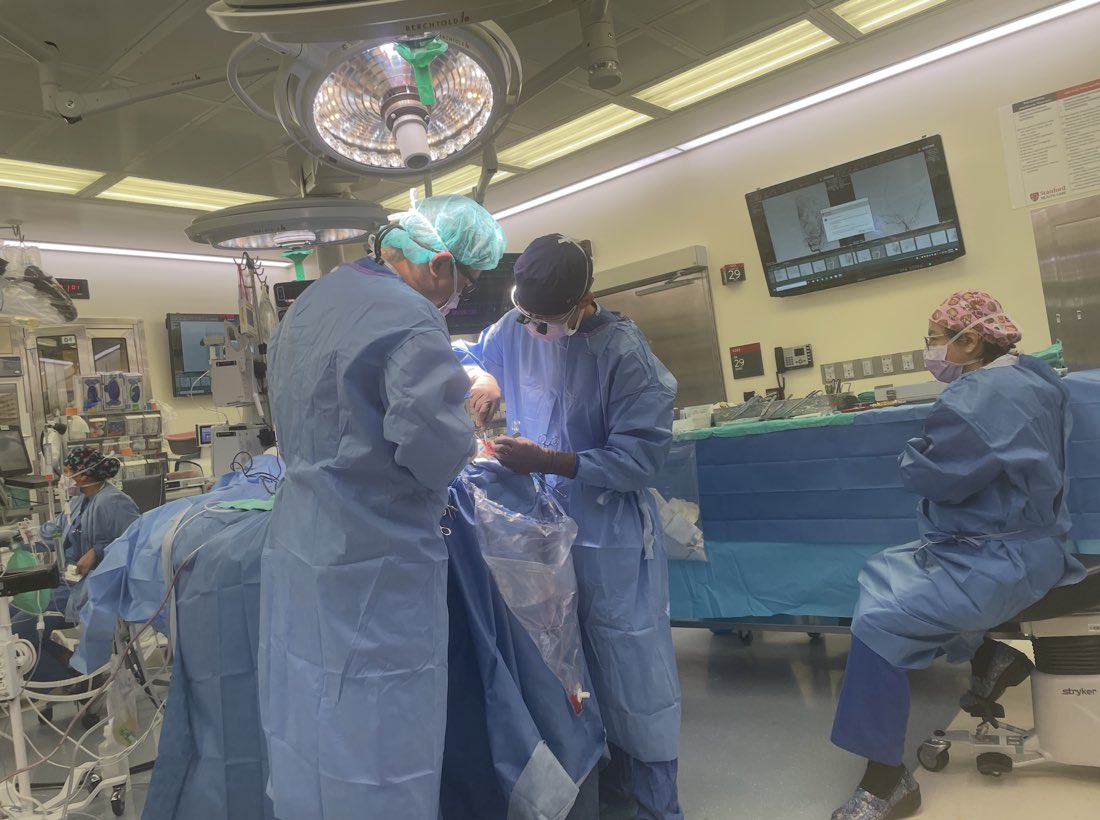
Surgeons in gowns and caps at work over the operating table under the surgical lights, a gowned team member seated beside the draped instrument table.
My POV while shadowing in the neurosurgery OR at Stanford Hospital
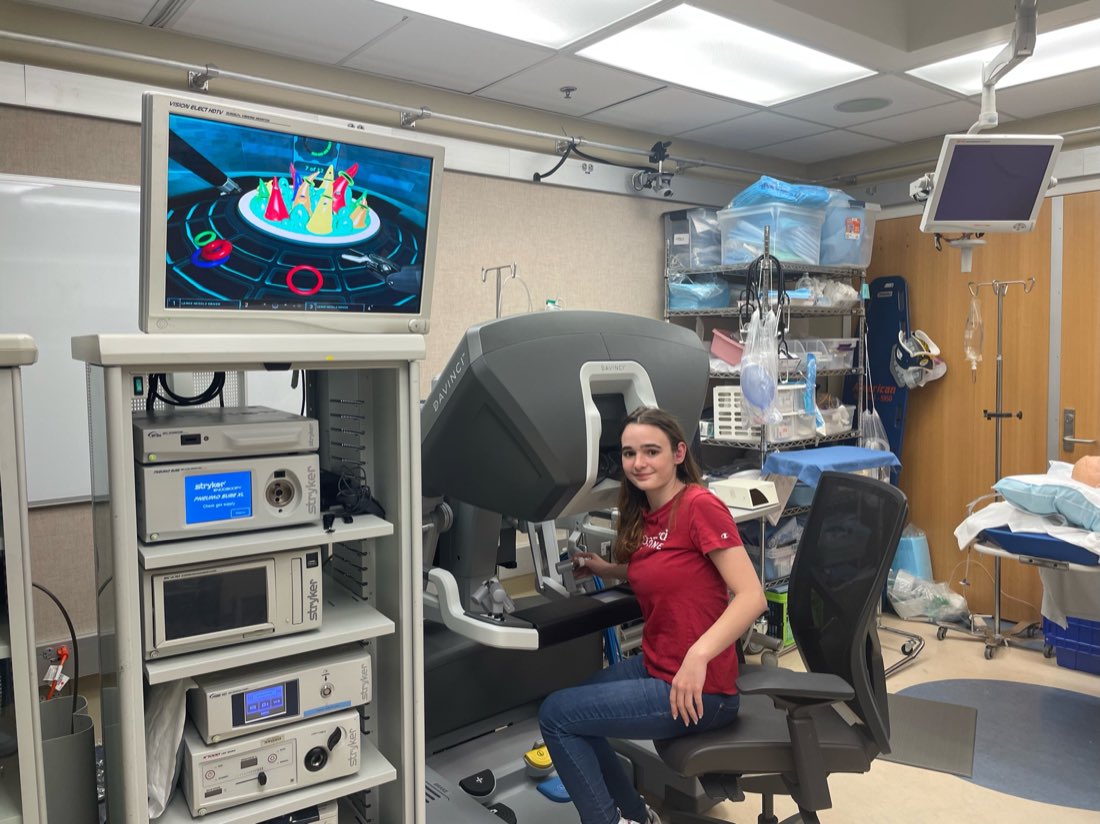
Sitting at a da Vinci surgeon console in a training lab, a monitor tower beside it showing a simulated exercise.
Me learning to use the Da Vinci machine at Stanford Hospital
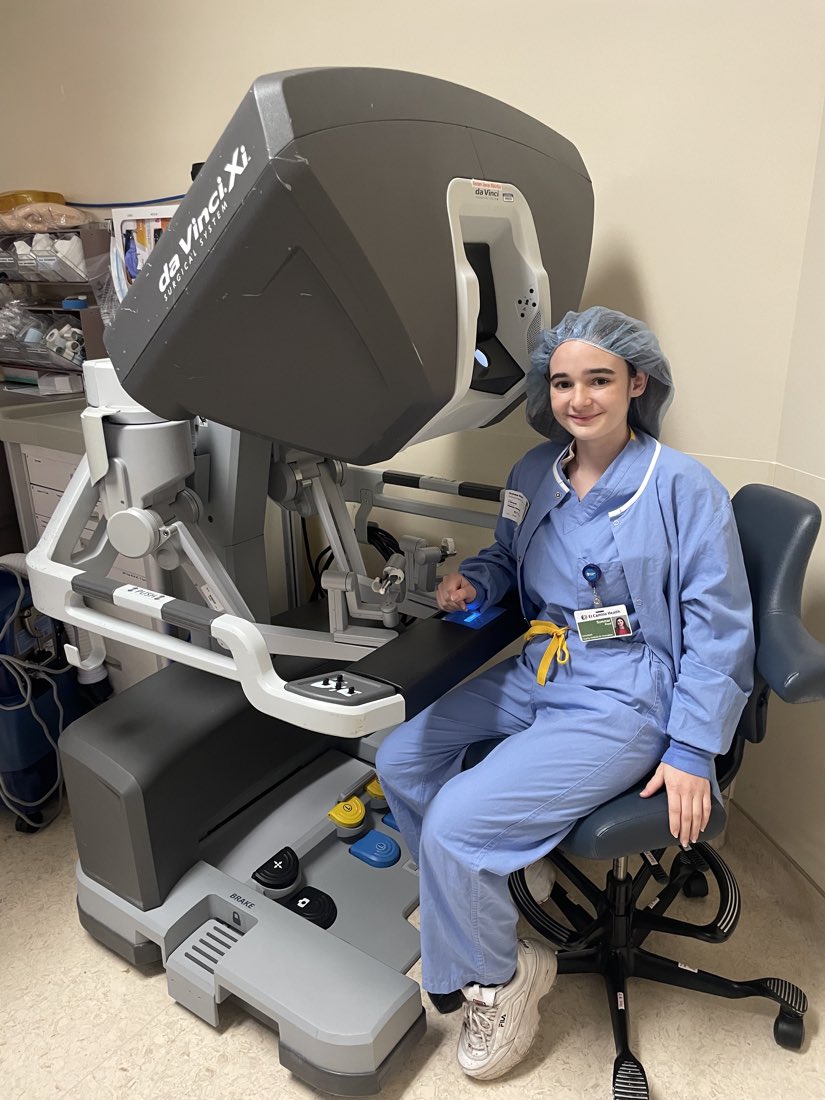
Sitting in blue scrubs and a bouffant cap beside a da Vinci Xi surgeon console, one hand resting on its controls.
Me using the Da Vinci machine at El Camino Hospital
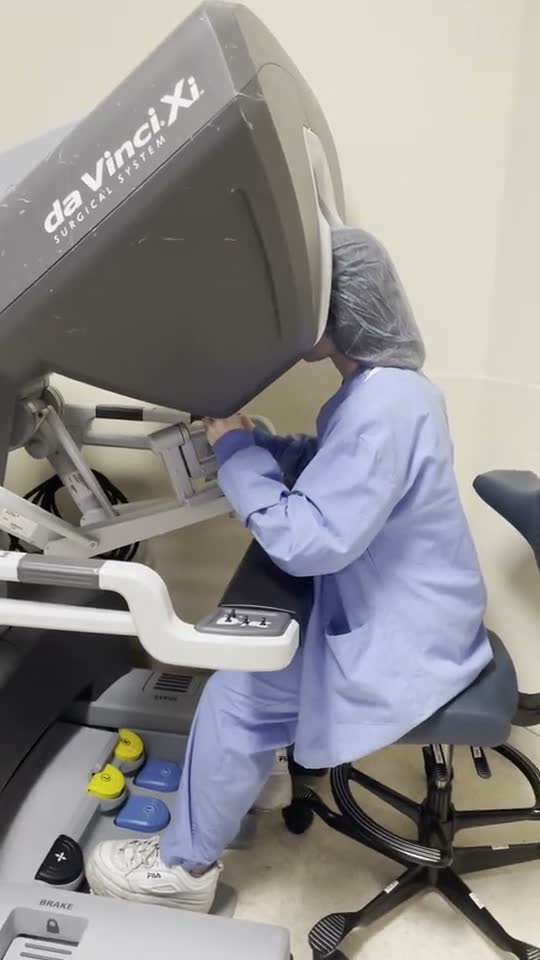
Seated at a da Vinci Xi surgeon console in blue scrubs and a bouffant cap, looking into the viewer while the robot's arms work on a practice pad.
Me practicing a laparoscopic surgery using the Da Vinci machine at El Camino Hospital

Textbooks don't show you what a procedure actually looks like in practice. I shadow to see that: how a team moves through a case, where the pace slows because of a bottleneck with the technology, and which steps take more attention. Even in a well-equipped hospital, the gaps are there, just smaller and more specific than a textbook would suggest. Since I come from a bioengineering background, I look at things from a biodesign perspective and shadow for the purposes of identifying unmet clinical needs.

Stanford Hospital

Stanford, CA

SHADOWED IN

  • Neurosurgery
  • Neurology
  • Pediatric cardiology
  • General surgery
  • Emergency department

El Camino Hospital

Mountain View, CA

SHADOWED IN

  • General surgery
  • Gynecology
  • Radiology

CERTIFICATIONS

Medical Diagnosis & Treatment

2018

John A. Burns School of Medicine, University of Hawaiʻi

A medical school certification in diagnosis and treatment, taken while still at school in Honolulu.

Memberships

Stanford SupplyHer

Co-founder & Financial Officer

A club that fundraises for victims of domestic abuse and for other under-resourced women. Co-founded it, and runs the money.

GENERAL MEMBER

Tree HacksStanford Mathematical OrganizationWomen in CSStanford Brain-Computer InterfacesCS for Social GoodScientists Speak UpSynapse Brain Injury Support GroupGirl Scouts of AmericaStanford Dance Marathon

The Brain-Computer Interfaces club is where the mind-controlled lightbulb came from, and Tree Hacks is where a weekend is occasionally spent building something that did not exist on Friday.

About

Summer Olivia Royal

I’ve wanted to pursue a career in medicine from an early age because I was captivated by the study of how our biology shapes our thoughts, feelings, and behaviors. Our minds are fundamental to who we are as individuals, and I felt there would be nothing more rewarding than helping people regain their quality of life by treating neurological conditions. I often thought of neuroscience as a puzzle with missing pieces—we have countless fragments of knowledge about the brain, but the challenge lies in figuring out how they fit together and filling in the gaps.

Fast forward to high school, when I took my first computer science course and realized that CS fascinated me for many of the same reasons. Computer science is fundamentally about finding new ways to frame problems and building solutions from the information available. You start with a set of constraints and known pieces, then determine how to put them together to create something that works. For a while, I struggled to decide whether I wanted to pursue medicine or software engineering. After taking courses that explore the intersection of medicine and engineering, however, I realized that I don’t necessarily have to choose between the two.

I am eager to immerse myself in interdisciplinary environments where I can combine my knowledge of medicine with my love for software engineering. My background in healthcare technology, machine learning, and collaborative problem-solving has prepared me to contribute meaningfully to projects at the intersection of healthcare and technology. I’m particularly drawn to opportunities where software can help make sense of complex biological and clinical information, improve how healthcare is delivered, or enable solutions that were previously out of reach. Ultimately, I hope to build technology that not only solves challenging technical problems, but also has a tangible impact on people’s health and quality of life.

HOBBIES

I enjoy reading nonfiction, watching romcoms, photography, going to scenic places, trying out new dessert shops, jiu-jitsu, and rock wall climbing! I also really love to travel to other places to see how people live and think differently around the world. Check out some of my travel highlights below :)
TRAVEL

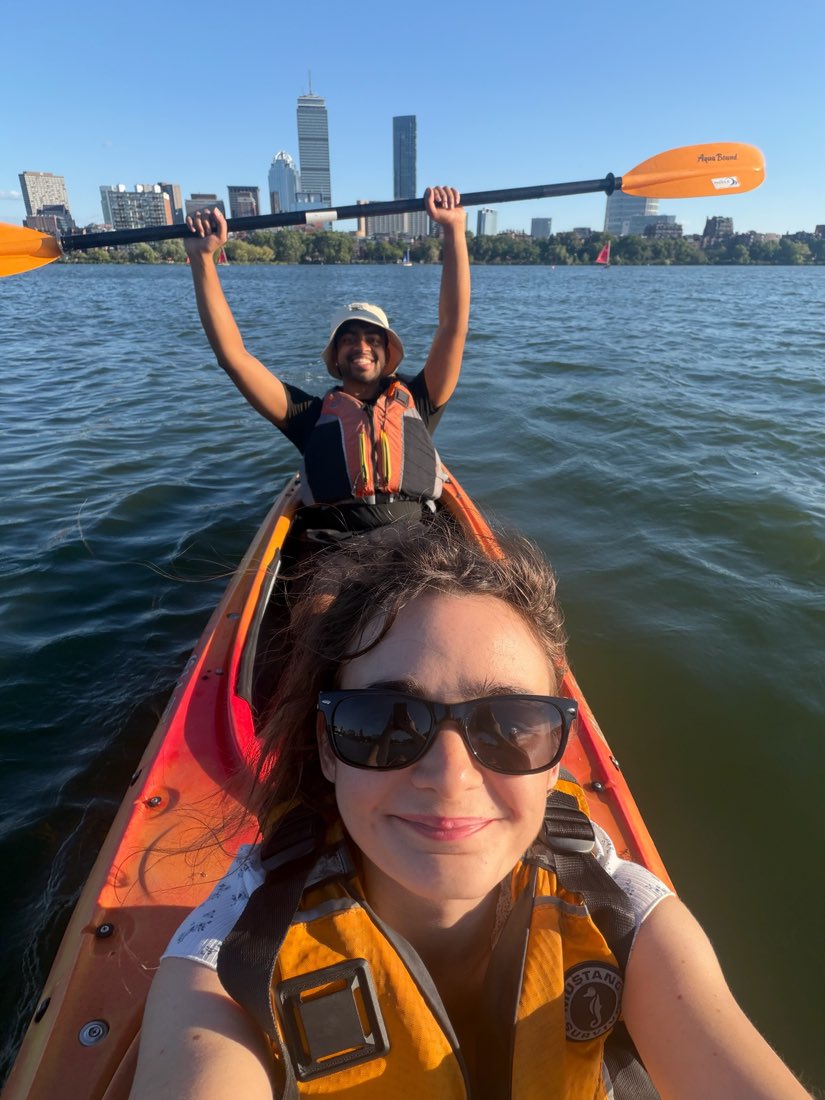
Kayaking on the Charles River with the Boston skyline behind.

Boston, USA

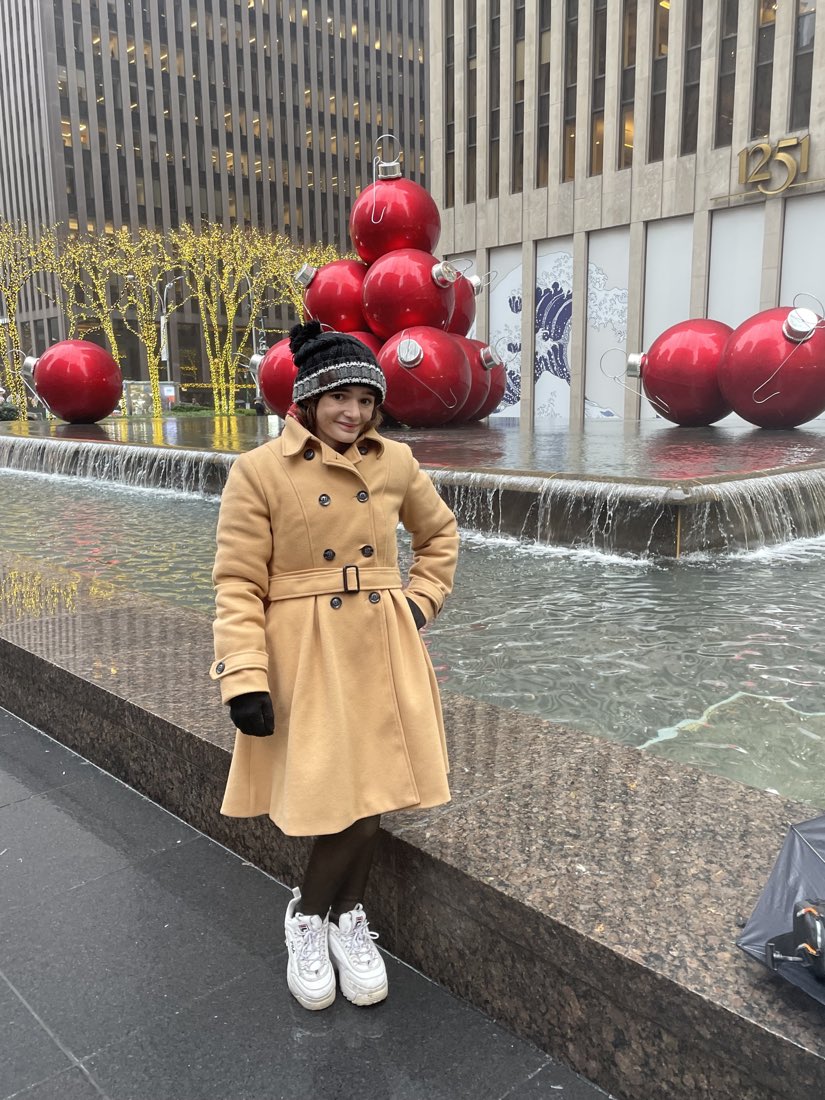
By the giant red Christmas ornaments on Sixth Avenue in Manhattan.

New York City, USA

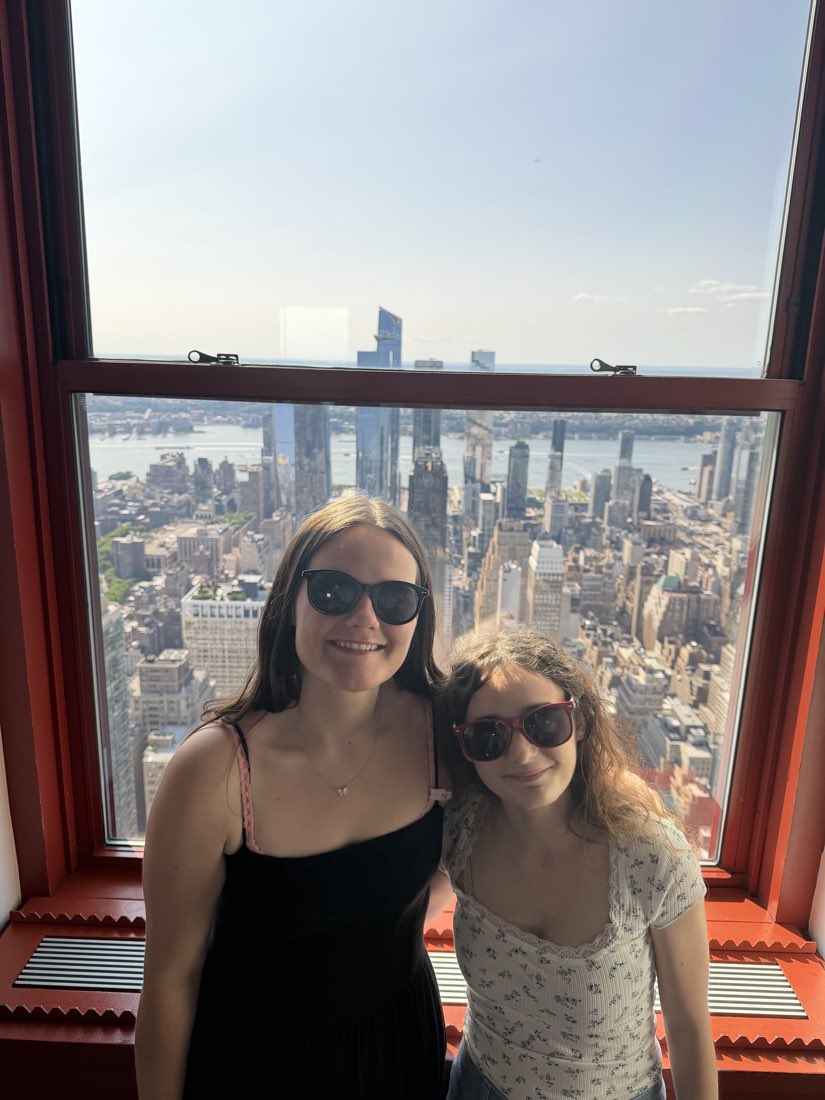
At a window near the top of the Empire State Building, Manhattan below.

New York City, USA

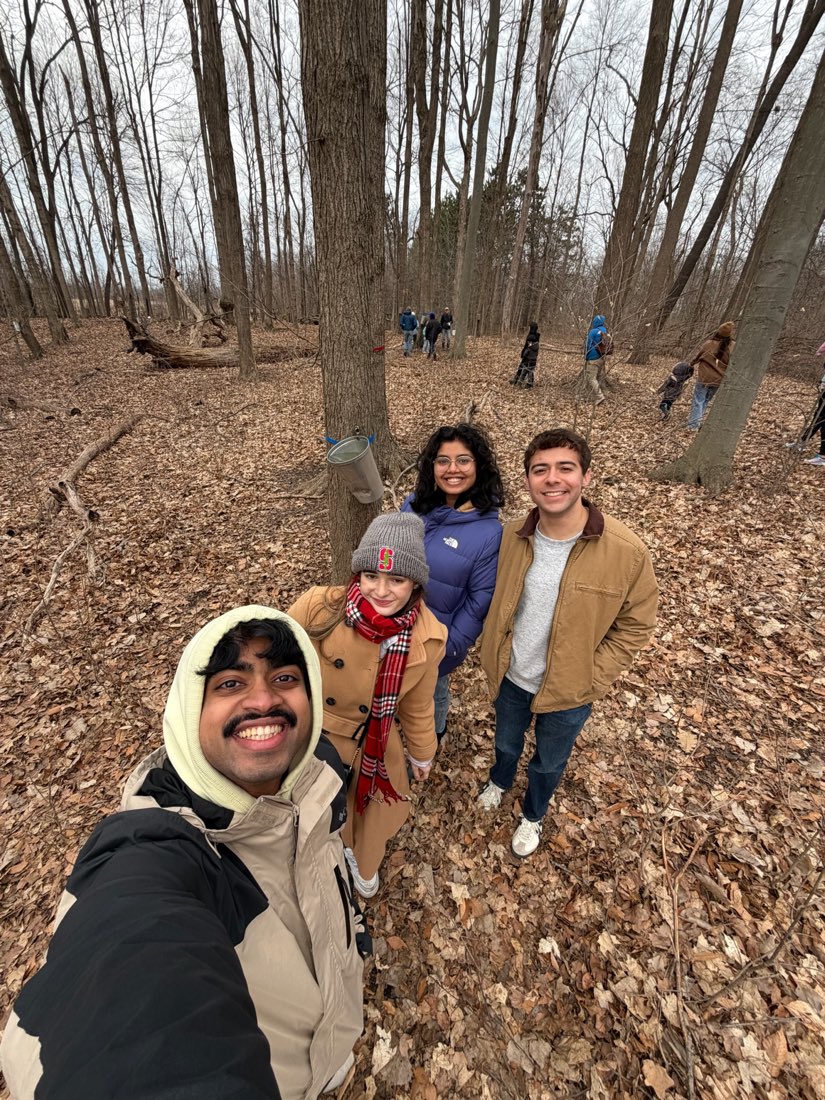
A winter walk through bare woods and fallen leaves with friends.

Michigan, USA

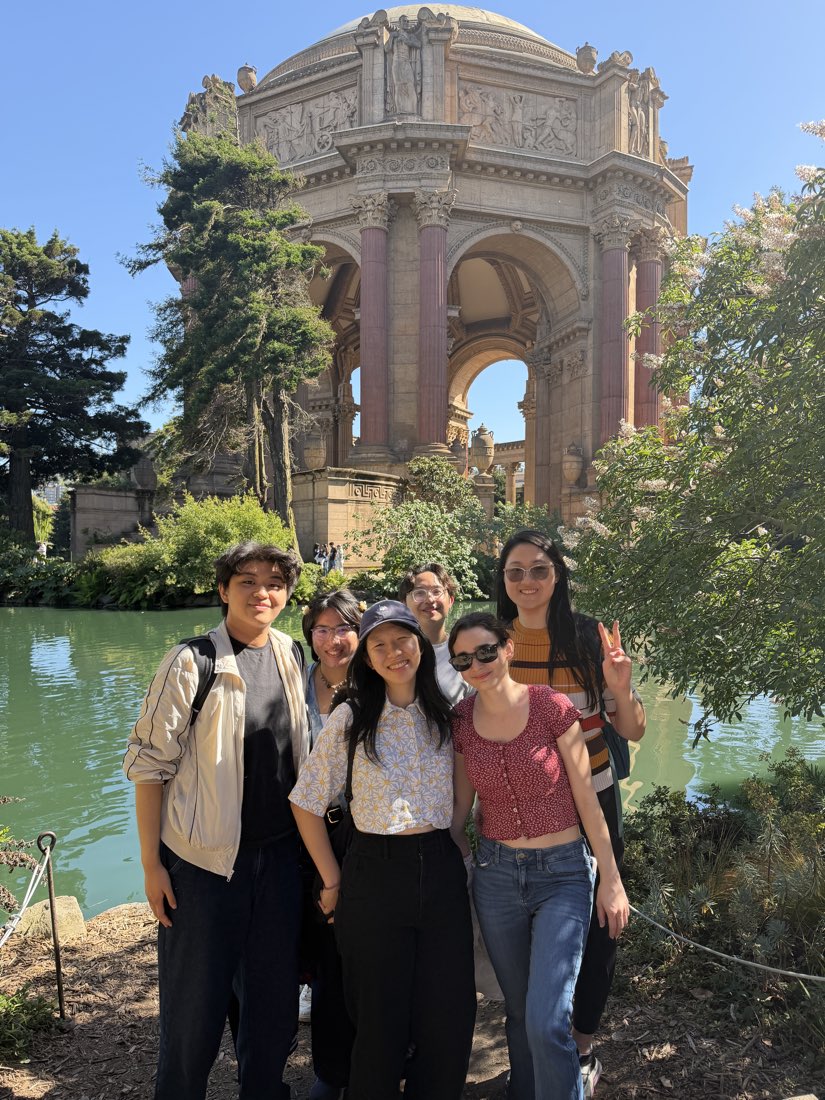
With friends in front of the rotunda at the Palace of Fine Arts.

San Francisco, USA

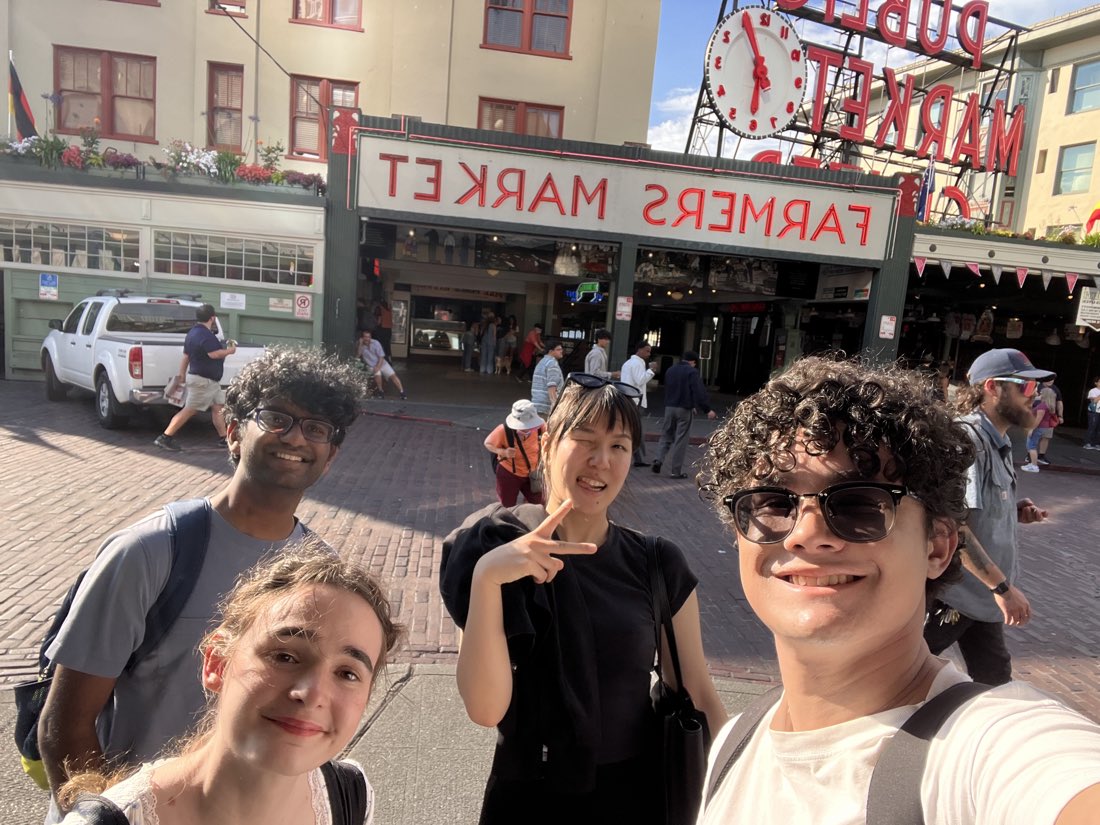
Outside the Pike Place Market sign with friends.

Seattle, USA

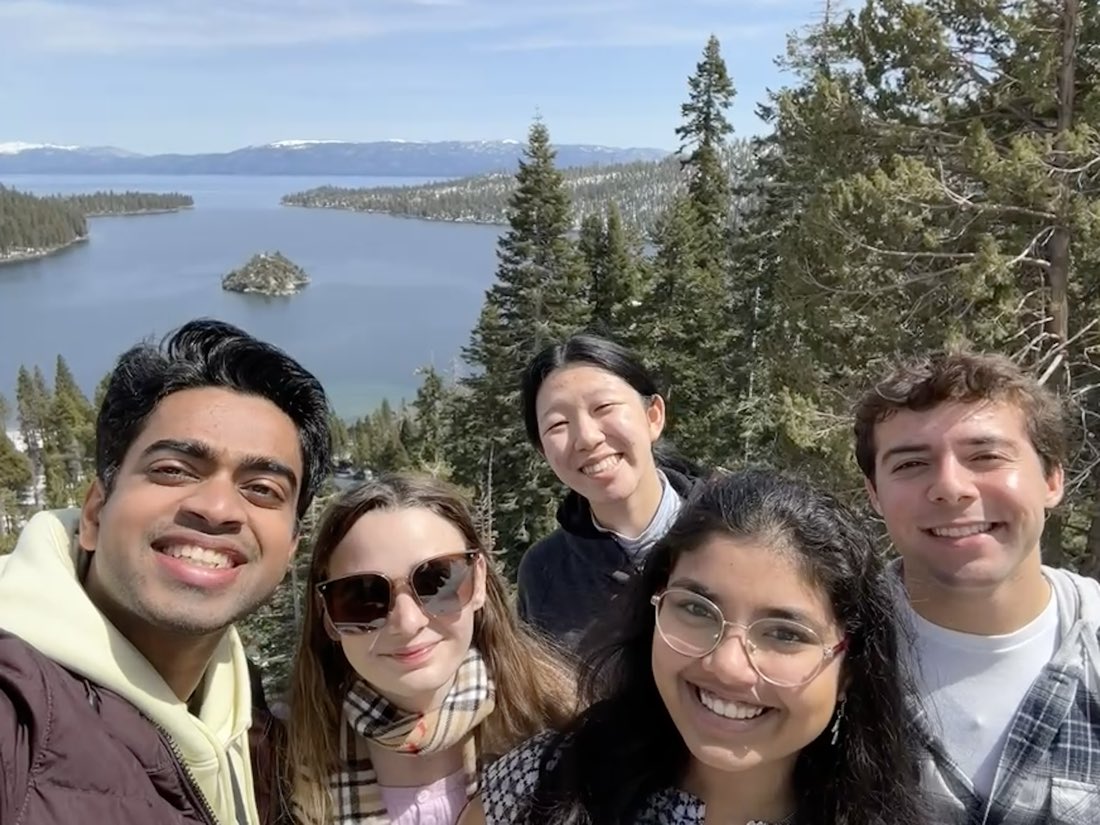
Above Emerald Bay, Fannette Island and the pines behind.

Lake Tahoe, USA

On the grass below Diamond Head.

Honolulu, USA

On a zipline through the treetops in the evening light.

Tamarindo, Costa Rica

Riders on horseback silhouetted along the beach at sunset.

Montezuma, Costa Rica

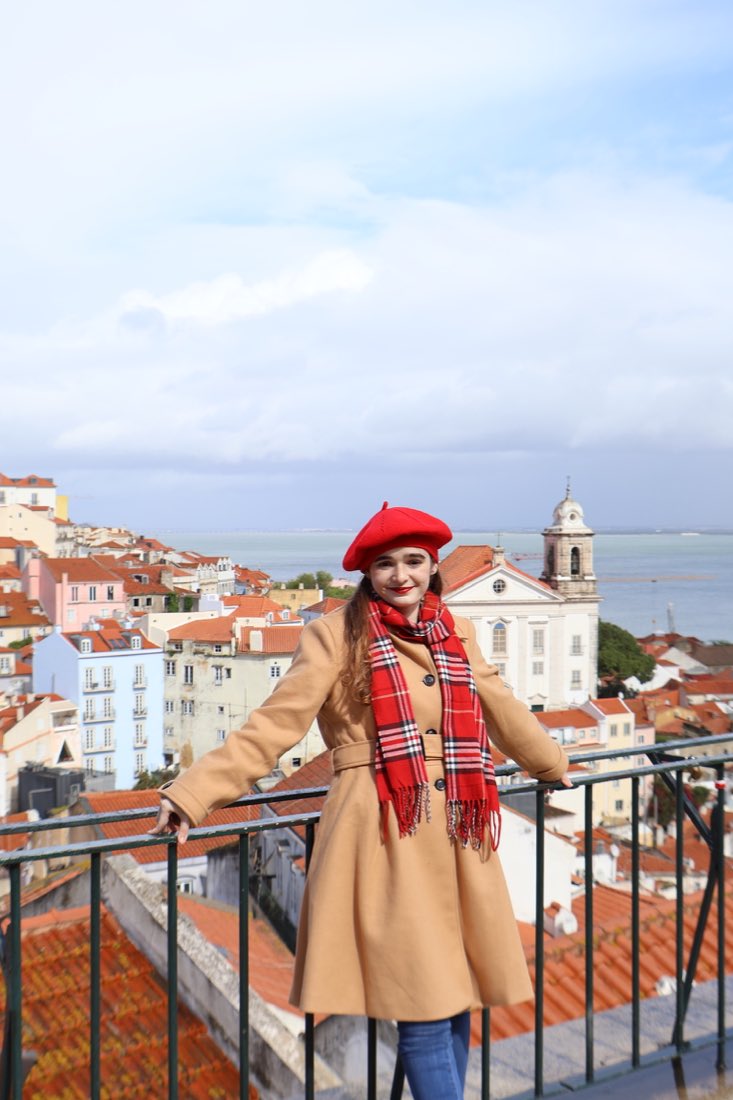
On a miradouro above the Alfama rooftops and the Tagus.

Lisbon, Portugal

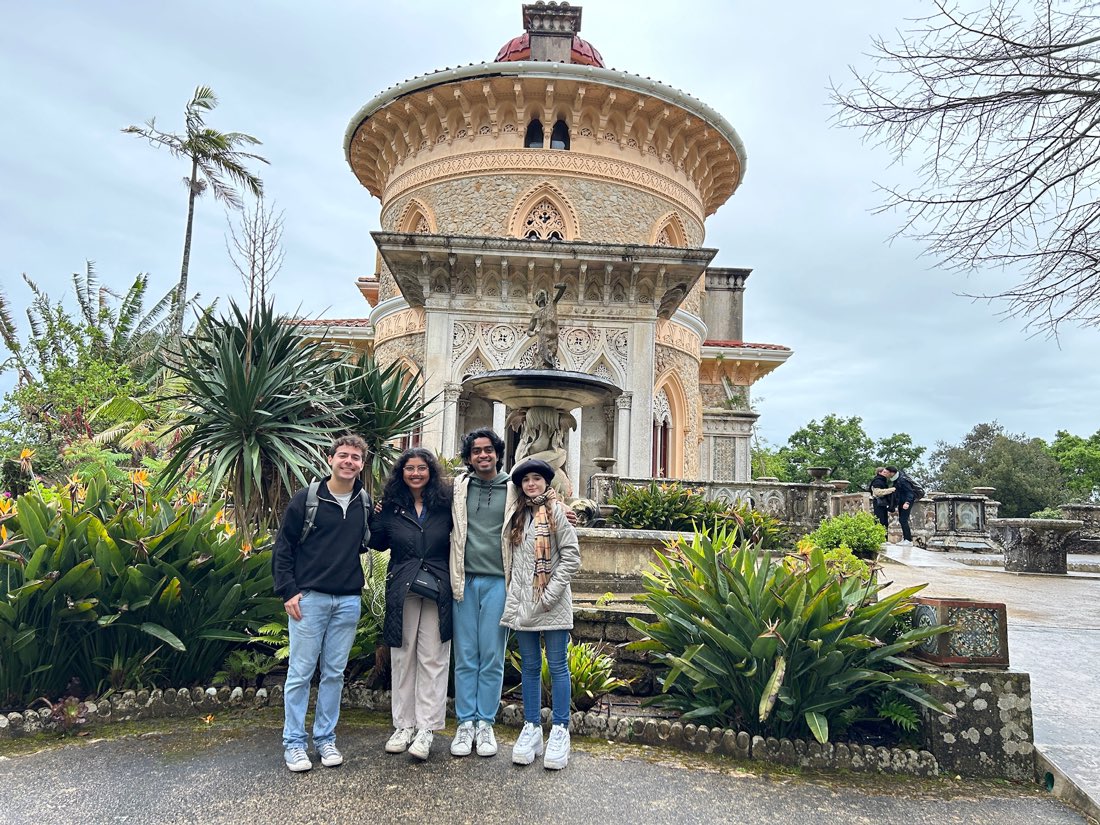
With friends in the gardens in front of the Palace of Monserrate.

Sintra, Portugal

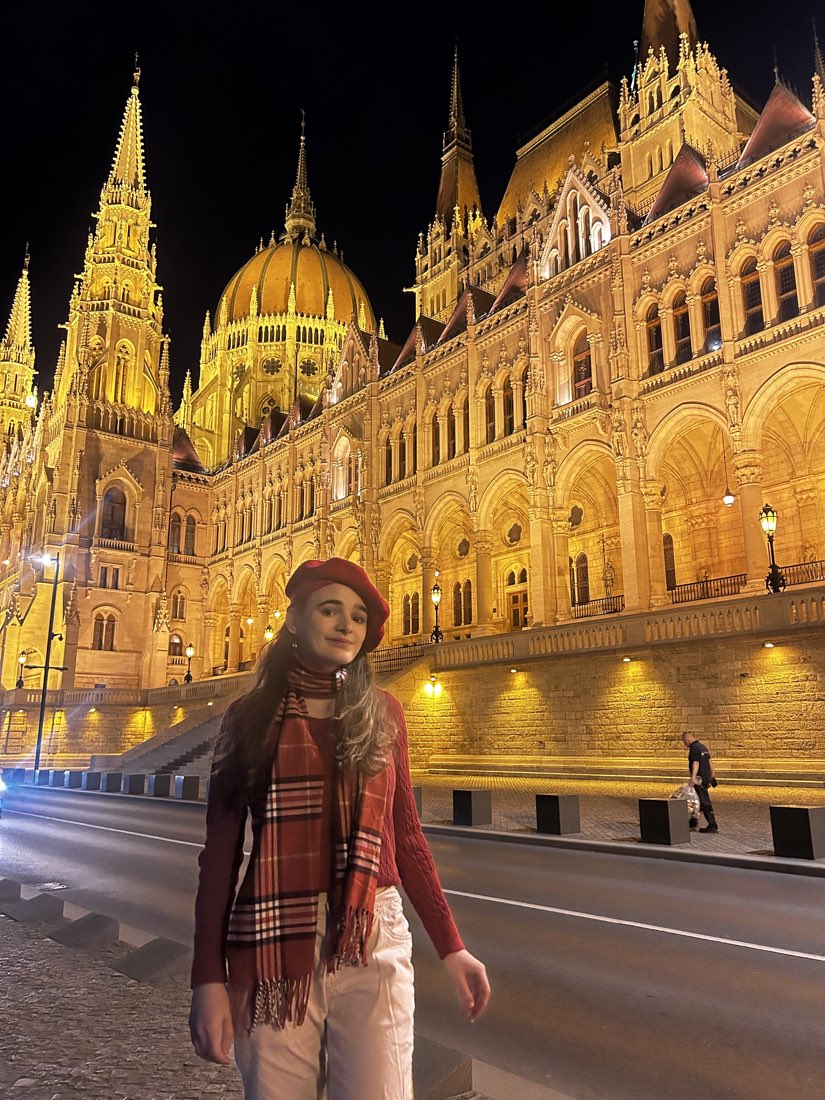
At night in front of the lit Hungarian Parliament Building.

Budapest, Hungary

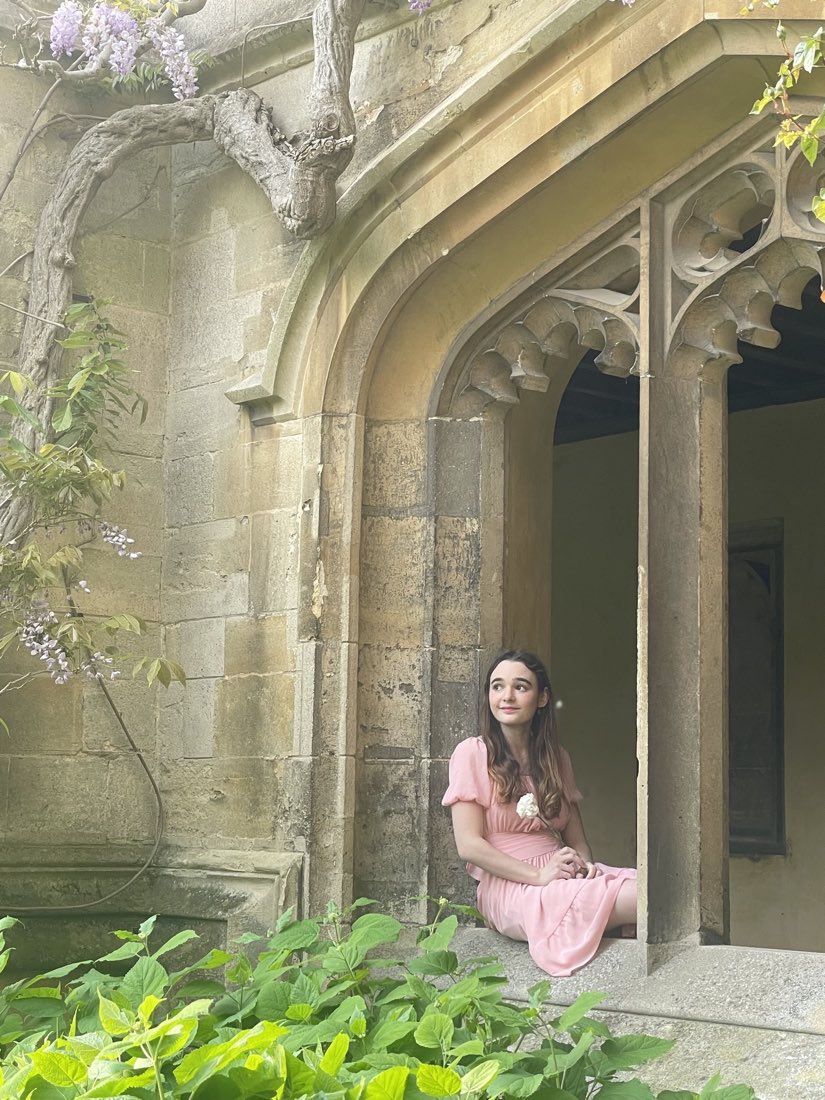
Sitting in a stone archway under trailing wisteria.

Oxford, England

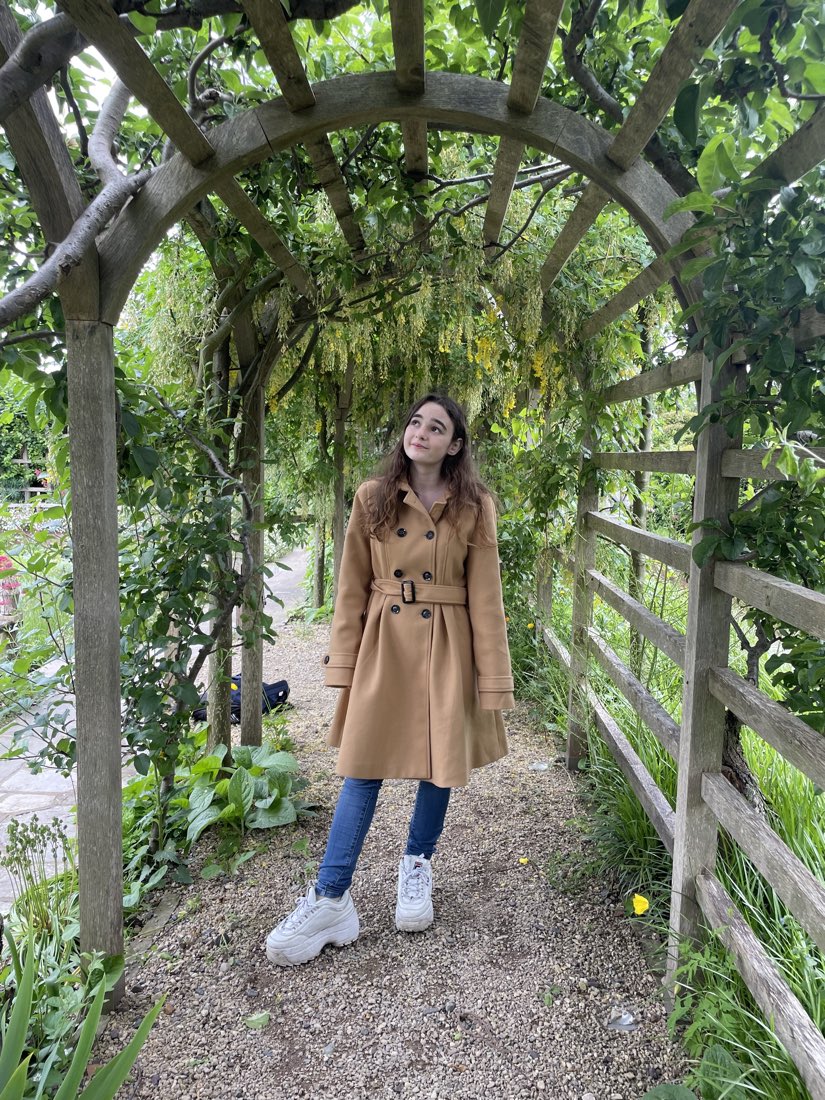
Under a garden arch hung with green.

Stratford-upon-Avon, England

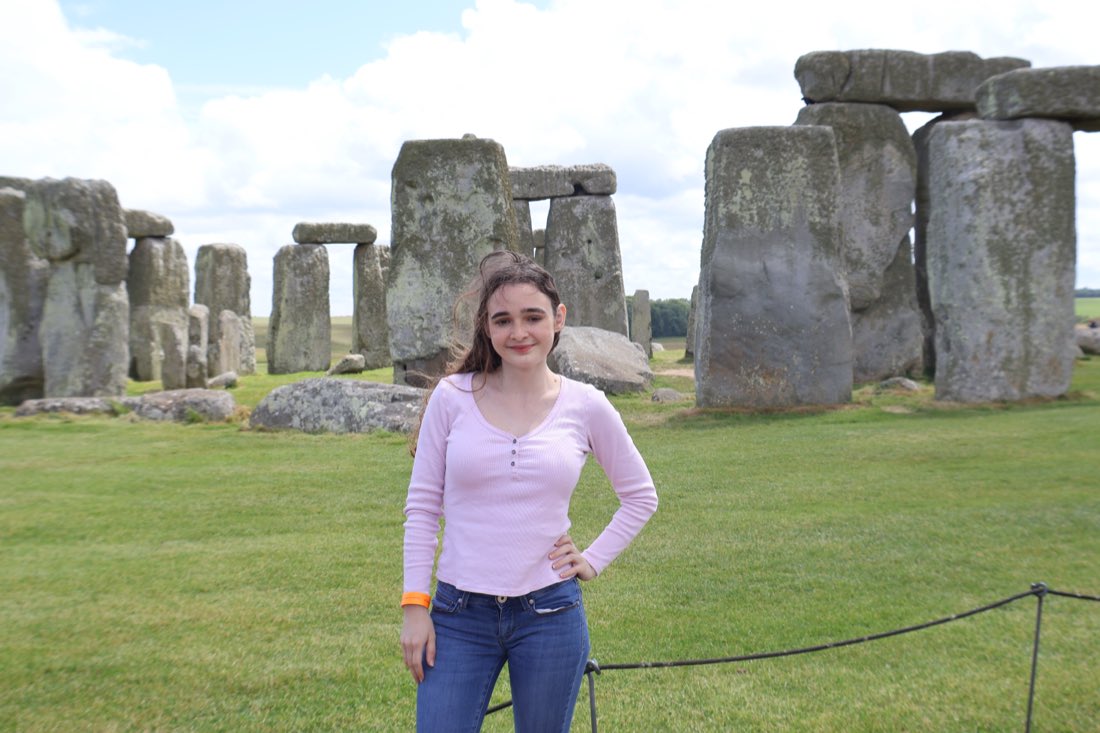
In front of the standing stones at Stonehenge.

Salisbury, England

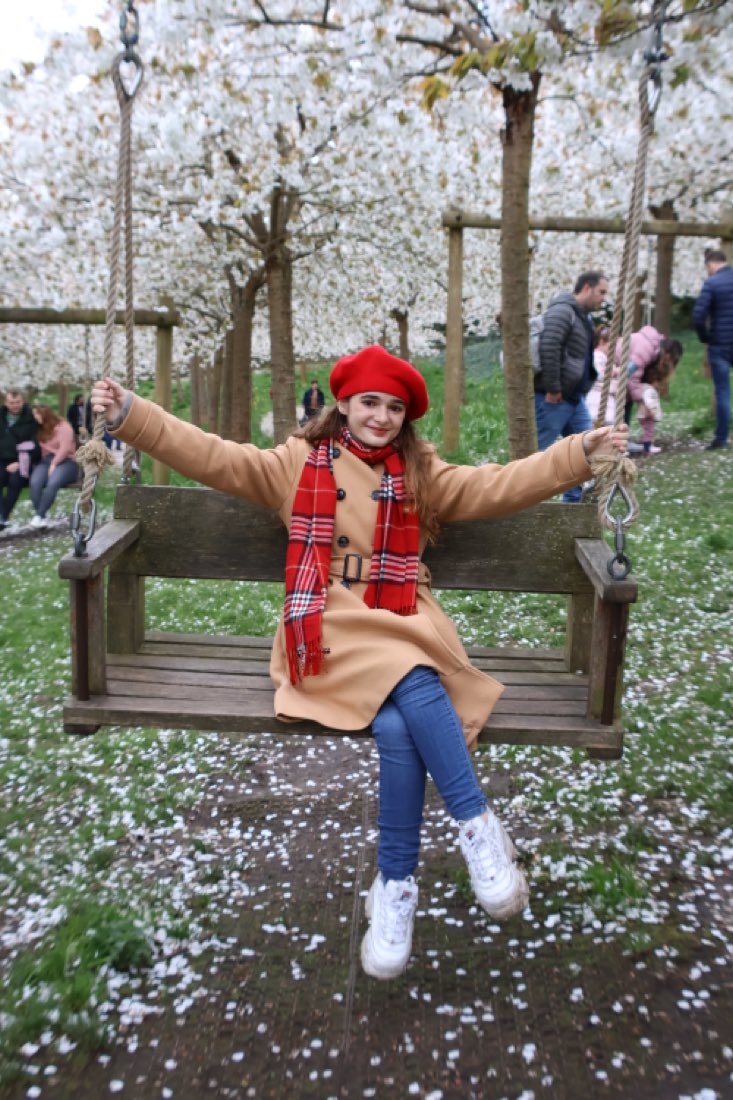
On a swing in a cherry orchard in full white blossom.

Northumberland, England

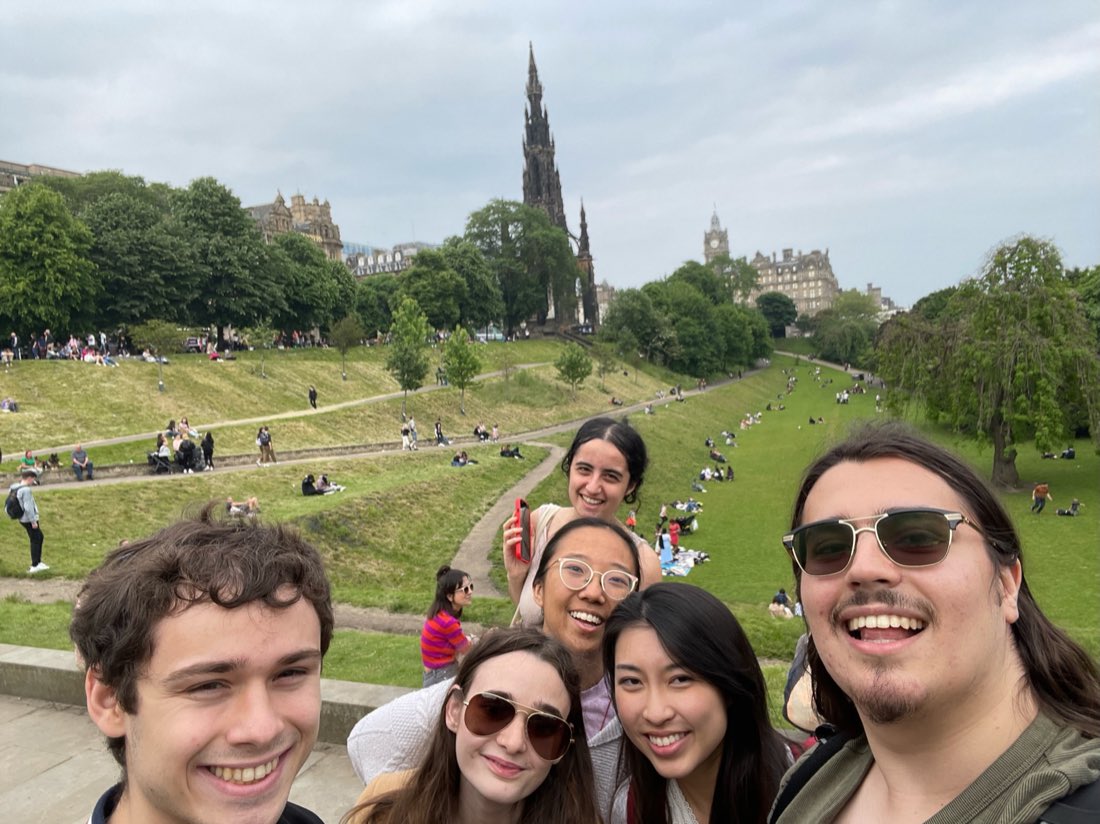
In Princes Street Gardens with friends, the Scott Monument behind.

Edinburgh, Scotland

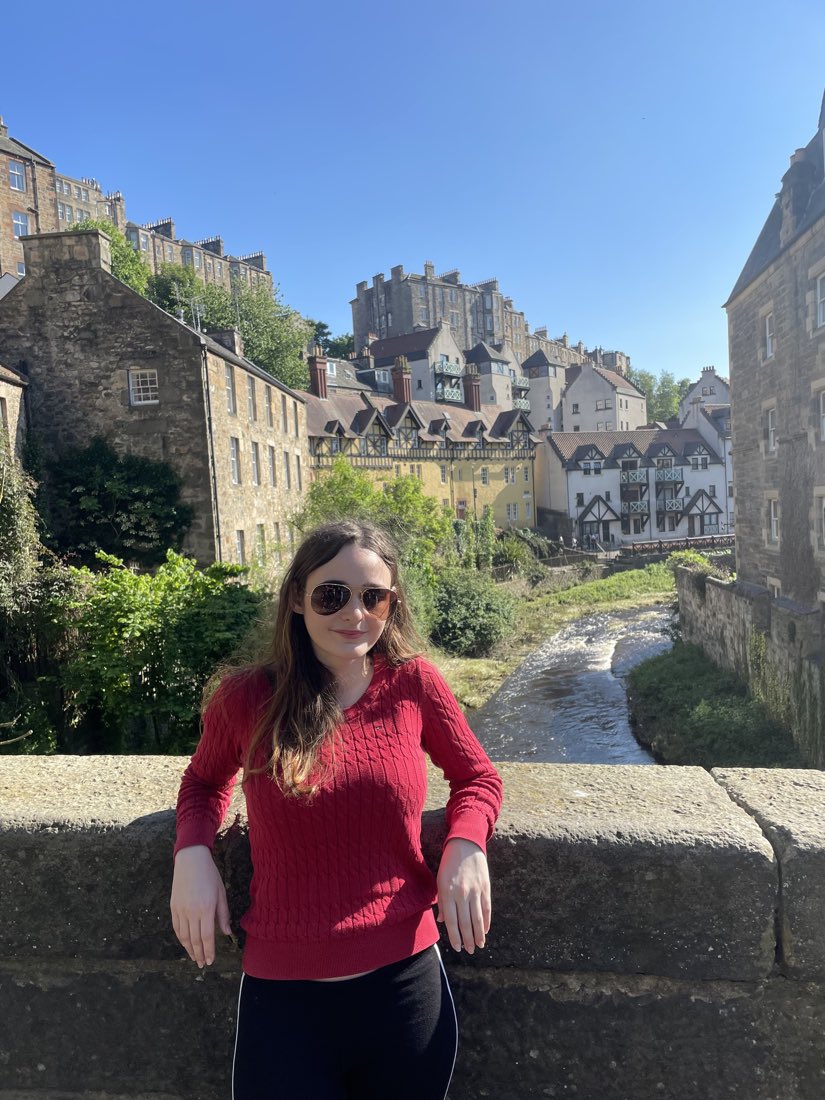
On the bridge over the Water of Leith at Dean Village.

Edinburgh, Scotland

Currently reading